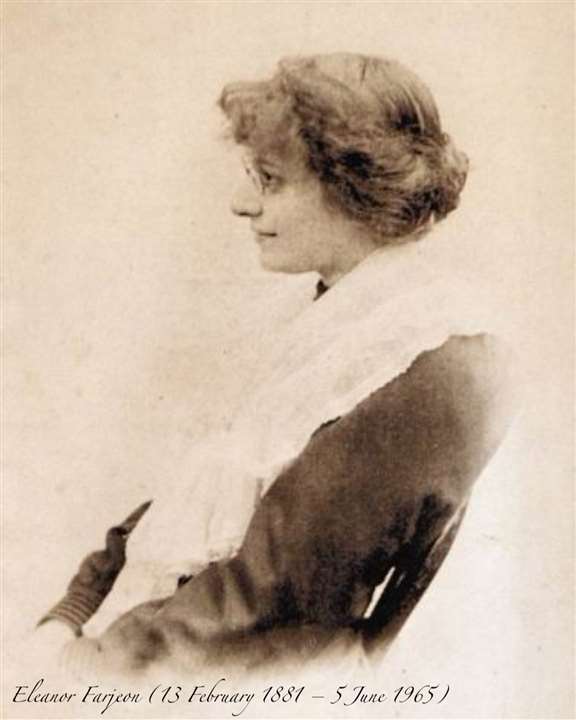
It Was Long Ago
By Eleanor Farjeon
I'll tell you, shall I, something I remember?
Something that still means a great deal to me.
It was long ago.
A dusty road in summer I remember,
A mountain, and an old house, and a tree
That stood, you know,
Behind the house. An old woman I remember
In a red shawl with a grey cat on her knee
Humming under a tree.
She seemed the oldest thing I can remember.
But then perhaps I was not more than three.
It was long ago.
I dragged on the dusty road, and I remember
How the old woman looked over the fence at me
And seemed to know
How it felt to be three, and called out, I remember
"Do you like bilberries and cream for tea?"
I went under the tree.
And while she hummed, and the cat purred, I remember
How she filled a saucer with berries and cream for me
So long ago.
Such berries and such cream as I remember
I never had seen before, and never see
Today, you know.
And that is almost all I can remember,
The house, the mountain, the gray cat on her knee,
Her red shawl, and the tree,
And the taste of the berries, the feel of the sun I remember,
And the smell of everything that used to be
So long ago,
Till the heat on the road outside again I remember
And how the long dusty road seemed to have for me
No end, you know.
That is the farthest thing I can remember.
It won't mean much to you. It does to me.
Then I grew up, you see.
Eleanor Farjeon was a prolific English author known for her contributions to children's literature. Her work spanned several decades, encompassing poetry, prose, plays, and songs. Today, she is best remembered for the Christmas carol "Morning Has Broken" [which later became a well known song by Cat Steven’s] and her timeless children's verses.
Farjeon's poetry is characterized by its simplicity, musicality, and delicate imagery, often drawing inspiration from nature and folklore. She possessed a keen understanding of childhood, capturing the wonder, curiosity, and innocence of youth in her writing. This focus on crafting work specifically for children made her a pioneer in the field during her time.
Writing during a period that saw the rise of Modernism, Farjeon's work remained rooted in traditional forms and lyrical language. She shared this approach with contemporaries such as A.A. Milne and Walter de la Mare, both celebrated for their contributions to children's literature. Like these authors, Farjeon's work endures for its timeless appeal and ability to resonate with readers of all ages.
~From all poetry.com