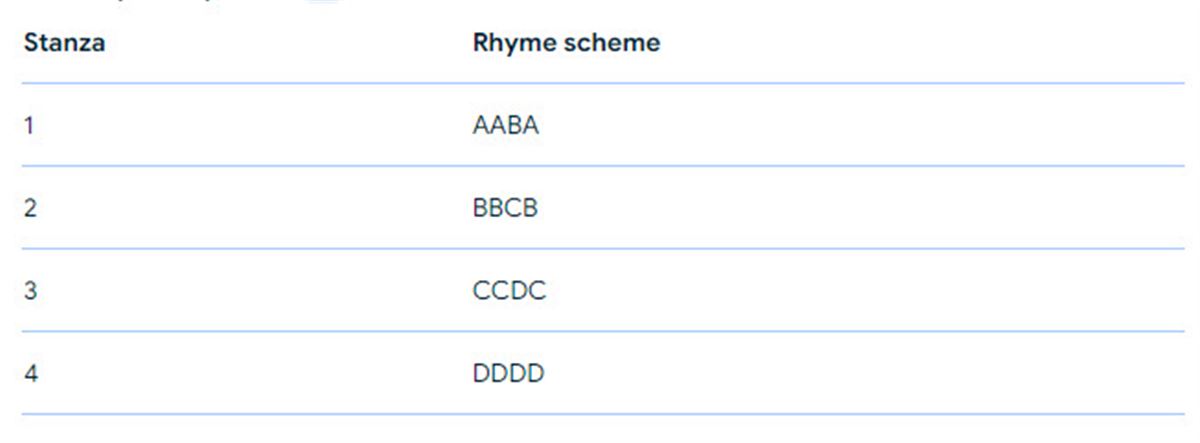
Chain rhyme is a rhyme pattern in which one stanza links to the next by repeating a sound from the middle or end of the earlier stanza in the next stanza's rhyme. The best-known example is terza rima, with an interlocking pattern such as ABA BCB CDC. Poets use chain rhyme to keep the poem moving forward while also tying the stanzas together.
There are several types of chain rhyme schemes, each with its own unique pattern and effect on the poem. Some common types include:
- Enclosed rhyme scheme: Also known as a "sandwich rhyme," this type features a rhyme pattern of ABBA, CDCD, and so on. The first and fourth lines rhyme with each other, while the second and third lines form their own rhyme. This creates a sense of closure within each stanza.
- Terza rima: This type of chain rhyme scheme follows a pattern of ABA, BCB, CDC, and so on. The last word of the second line rhymes with the first and third words of the following line. This type is commonly used in longer poems and creates a flowing and interconnected effect.
These are just a few examples of the types of chain rhyme schemes that poets can use to add depth and complexity to their work. Each type offers its own opportunities for creativity and expression within the structure of rhyme.
Example
The moonlit road began to glow
as tires whispered through the rain;
I followed where the roadside streams would flow.
The darkened fields held back the plain
of sleeping crops and broken stone,
and every puddle kept the rain.
It led me on, line after line, alone,
where dawn was waiting just ahead,
a silver door of wind and stone.
Robert Frost's Stopping by Woods on a Snowy Evening