Notes About The Poem
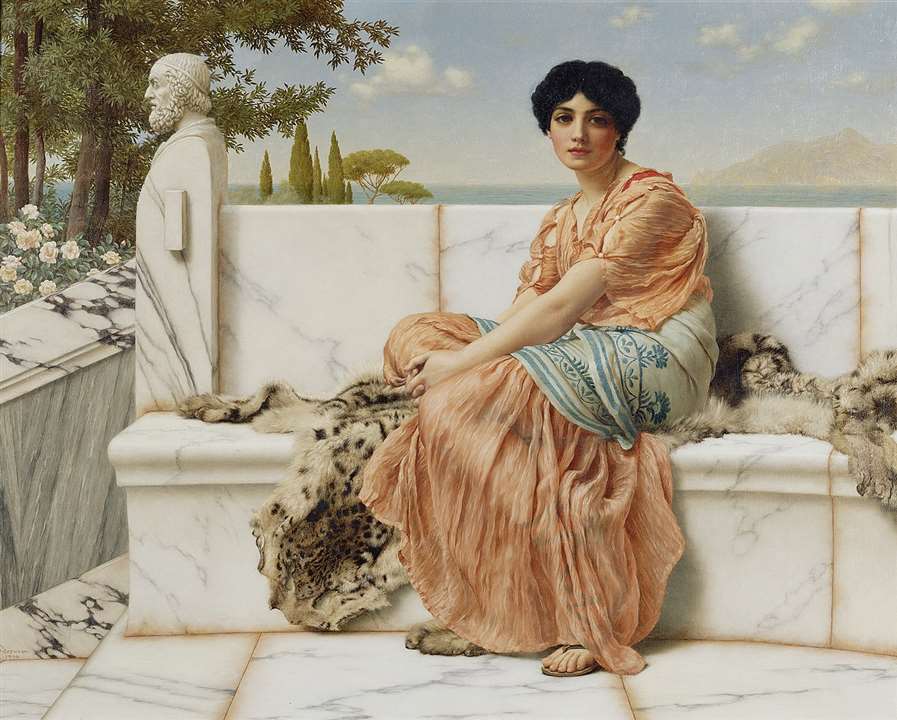 Image source: https://commons.wikimedia.org/wiki/File:John_William_Godward_-_Reverie_(In_the_Days_of_Sappho)_-_c_1904_-The_Getty_LA.jpg
A poem is self expression, but the self a successful poem expresses is that of the reader, not that of the writer.
Sappho: to Aphrodite
Aphrodite, immortal, enthroned in wonder,
Sky-daughter, webstress of love schemes, I entreat you
not to break my spirit with pangs of anguish,
Queen, Lady, Mother,

but now come to me, if in the past you ever
also heeded me when I cried from afar, and,
leaving behind the golden house of your father
Zeus, you descended

borne in a chariot yoked to a flock of lovely
sparrows flying fast over earth’s black richness,
thickly fluttering wings leading you a passage
through bright mid-heaven,

soon arriving, and you, O supreme in blessing,
eternity’s smile gleaming from your expression,
asked me now this time what again I suffered,
what did I pray for,

what beyond all else I would want to happen
with all my love-maddened heart: “Who now needs persuasion
to be led back to your affection? Who is it,
Sappho, who hurts you?

Though she now may run, she will soon pursue you;
now she may spurn gifts, but she soon will give them;
now she feels no love, but she soon will feel it,
even unwilling.”

Come to me this time again: act as my deliveress
from this mastering pain, and, as the fulfiller
of everything that my passion hopes for, take your
stand as my ally.


-------------------------------------------------------------------------------

— translated from the Greek by Jon Corelis

The YouTube video is my musical setting of this poem performed by Beth Ratay.
Post Comments
Poetrysoup is an environment of encouragement and growth so only provide specific positive comments that indicate what you appreciate about the poem. Negative comments will result your account being banned.
Please
Login
to post a comment

Turn off ads, get more exposure for your poetry, and get more features with a
Premium Membership.
