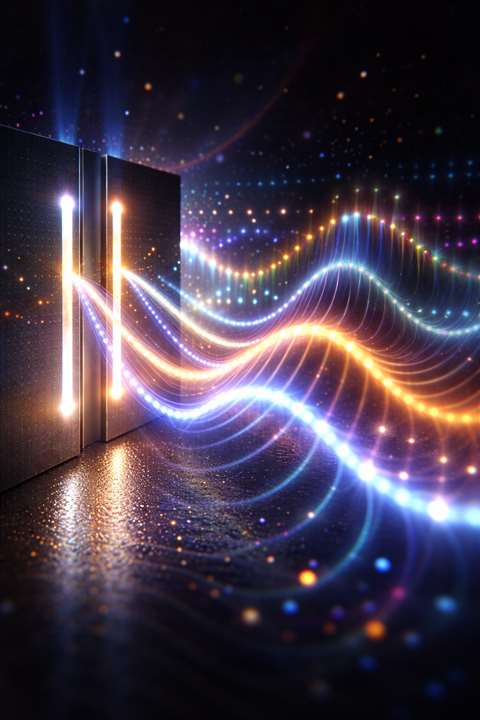
The double-slit experiment, described by Thomas Young in 1801, demonstrates that light and matter can exhibit behavior associated with both classical particles and classical waves. Through the slits, each particle behaves as if it is a wave, spreading out and interfering with itself and other particles creating a wave pattern rather than spots. But when you look closely to see which slit the particle goes through, it suddenly behaves like a particle again. So light, electrons and other matter are neither particles or waves — they are both, depending on how they are observed.
The same can be applied to us: You are not good or bad; You are not serious or silly; You are not fixed.
You are a wave of superposition — until circumstance, fear, desire, or attention, collapses and focuses you into action. Just as light reveals different natures when tested, humans reveal different versions of themselves depending on how, when, and why they are observed.