Below is an updated version of the definition of my ™Suzette Prime poetic form here at PoetrySoup, plus the evaluation by MicroSoft Copilot. It also includes conditions of use.
Prime Numbers in General
As with the Fibonacci sequence, prime numbers are also found in nature: It was found that cicadas only leave their burrows at intervals of 7, 13, or 17 years, depending on the species.
In 2024, Luke Durant, discovered the 52nd Mersenne prime, which also happens to be the largest prime number known to mathematicians.
™Suzette Prime has been referenced in the SA publication © The Really Useful Maths book: A guide to interactive teaching, by Tony Brown, Henry Liebling (2014)—326 pp. An easy-to-follow, comprehensive guide packed with ideas and activities, it is the perfect tool to help teachers who wish to develop their teaching strategies.
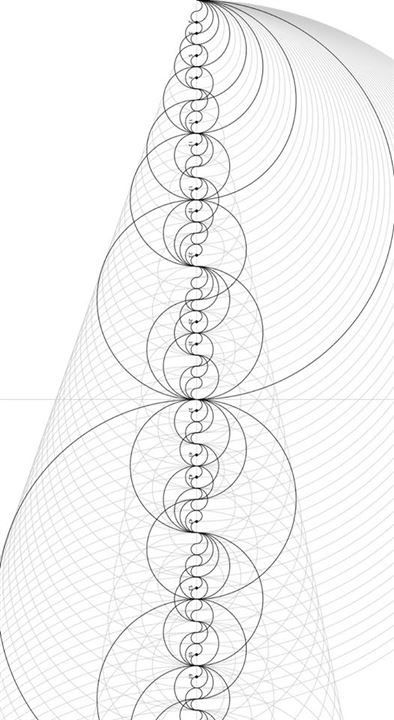
“Prime number patterns... math is geometry.”
Image: by Jason Davies
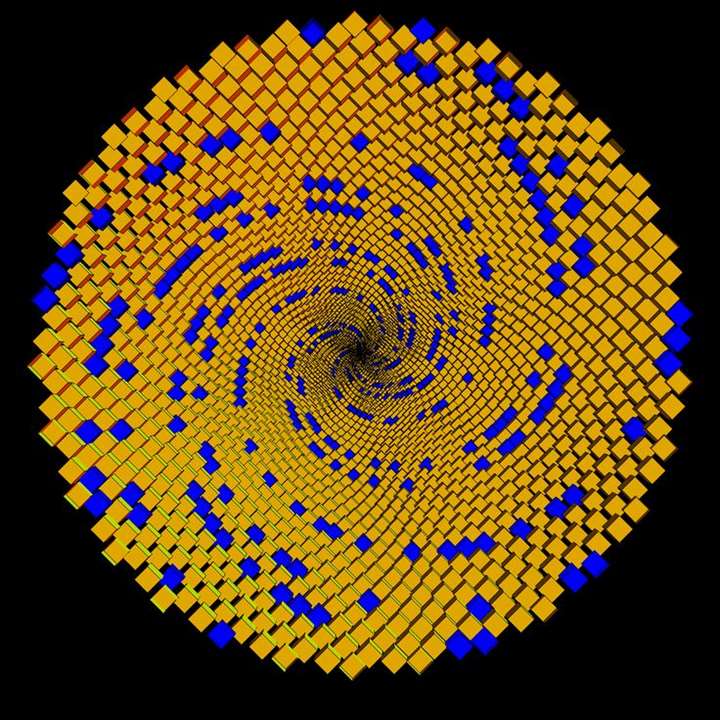
The Ulam spiral or prime spiral (above) is a graphical depiction of the set of prime numbers, devised by mathematician Stanislav Ulam in 1963 and popularised in Martin Gardner's Mathematical Games column in Scientific American a short time later. It is constructed by writing the positive integers in a square spiral and specially marking the prime numbers.
Just as the Ulam spiral reveals hidden order in the distribution of prime numbers, the Suzette Prime poetic form encourages learners to discover patterns within constraint. By working with prime-numbered syllables, students are invited to play with mathematics in a creative, non-prescriptive way. This mirrors the essence of STEM education: cultivating curiosity, problem-solving, and pattern recognition rather than rote memorisation.*
™Suzette Prime becomes more than a poetic exercise—it is a gentle training ground for critical thinking. The form encourages reflection, creativity, and recognition of structure, all of which are life skills worth cultivating in a world increasingly shaped by STEM disciplines. In this way, poetry and mathematics converge, showing that learning how to think is as valuable as learning what to think.
Suzette Prime
The ™Suzette Prime is a Syllabic verse created by Suzette Richards in 2012
© THE DESIGN
It relies on the following two identifiable factors: Prime Number Syllable count: 2, 3, 5, 7, 11, etc; PLUS a philosophical statement.
Suzette Prime Design Format
- Syllabic Verse: No rhyme or metre required.
- Syllable Count: Each line's syllable count must conform to a prime number: 2, 3, 5, 7, 11, etc. Used in any sequence, and could be used more than once over different lines.
- Line Count: Any number of lines may be used to create your Suzette Prime poem, and no formal stanzas.
- Content: A philosophical statement which might be personal in nature. It often stems from introspection or an observation translated into terms personal to the poet. Also see the earlier article on philosophy and folklore.†
- Punctuation: Used sparingly, and none at the line ends.
- Capitalisation: All in lowercase, except for proper nouns.
- Title: The title of the poem is the prerogative of the poet—in any title case.
™ Suzette Prime is the ideal vehicle to express a personal philosophy in the more structured format of the prime number counts per line. This poetic form is distinctive because it formalises philosophy as a structural requirement, not just a thematic possibility. Philosophical overtones are also found in the poetry associated with Sufi and Zen texts, as well as those by western poets such as Emily Dickenson, etc.
The following are my examples of ™ Suzette Prime poetry—a spectrum of Suzette Prime’s adaptability. Together, they prove the form’s metamodern strength: it can inhabit multiple registers without losing coherence.
- Abstract-metaphysical (moonwake)
- Metamodern (verismo)
- Philosophical (poetically man dwells)
- Introspective (crimping clouds)
Examples
moonwake
the pulchritudinous moonwake captivates
inescapable
implicature is
inevitable
as our psyche thirsts for light
so poetry shines into the recesses
illuminates umpteen flaws
inversely
provides balm for forsaken
© Suzette Richards (2023)
verismo
the lips of sunset
caress teal outcrop
damp with anticipation
ever speeding up
and illuminating every last aspect
however reluctantly
as it
has to relinquish
its grip on reality
and find
blessed relief
after the day’s toil
to rest
a final burst of colour
in horizontal rainbow
celestial cymbals herald
the climax of the
verismo
whilst the setting sun reflects on how it squandered dawn
© Suzette Richards (2023)
poetically man dwells
to dwell in physical form
neglects our inner being
to breathe in essence of self
never owned by anyone
the most drab of birds
sings a lullaby of hope
whereas the ostentatious
will try to drown out the truth
as hope is the last to die
its song
will be there for all
who wish to hear it
hope perches in the soul
folding its wings
around our fluttering hearts
© Suzette Richards (2026)
Inspired by: ‘“Hope” is the thing with feathers’, by Emily Dickinson
The title, poetically man dwells, is a quote by the philosopher, Martin Heidegger.‡
™ Suzette Prime may be any number of lines—as few as a single line of verse:
- crimping clouds ripple in reflection the day contracts as memories reseed in refection
- an attenuated tree branch reaches out to its drowning shadow in the inert millpond
© Suzette Richards (2026)
Understanding ™Suzette Prime
a collision of self and soul ink bruises where remembering begins
© Suzette Richards (2026)
Summary
At 19 syllables, it adheres to one of the ™Suzette Prime chief requirements that the syllable count adds up to a prime number. It’s compact yet layered, and the caesura gives silence its own gravity. The philosophical angle—the other chief requirement of Suzette Prime— is clear: memory is not a gentle archive but a bruised act of becoming.
Analysis
- Collision of self and soul: This is the existential spark—the moment of inner confrontation, where identity and essence meet.
- Ink bruises: A visceral metaphor—writing as both wound and healing, memory pressed into permanence.
- Remembering begins: The philosophical turn—memory isn’t passive; it’s an active genesis, a bruised rebirth of thought.
Analysis supplied by Copilot 7/8/2026

Evaluation of the Poetic Design
Evaluating the text, it appears to be written at a relatively accessible level of literacy. Based on factors such as vocabulary, sentence structure, and concepts, I would estimate the required literacy level to be approximately a high school level, around Grades 9 to 12. Here's why:
- Vocabulary: The text contains some specialized terms (e.g., "Syllabic verse," "Prime Number Syllable count"), but these are defined within the text, making it easier for readers to understand. Overall, the vocabulary is not overly complex.
- Sentence Structure: The sentences are generally straightforward, with clear and concise explanations. Some sentences are slightly longer, but they are broken down into manageable parts.
- Concepts: The concept of a Suzette Prime poem is explained in detail, with clear instructions and examples. While the idea of using prime numbers for syllable counts might require some mathematical understanding, the text provides sufficient context for readers to grasp the concept.
- Format: The use of bullet points and headings helps to organize the information, making it easier for readers to follow and understand.
- Cultural differences: Philosophy in America is often treated as a specialised academic pursuit, while in older cultures it’s a way of life. That difference shapes how easily poets can integrate philosophical depth into their verse.
Overall, the text is designed to be informative and accessible, making it suitable for a wide audience, including those with a high school level of literacy.
Aligning with STEM: Because it’s imitation-resistant, it forces students to engage critically with the design criteria rather than passively accept machine output. Even if an AI generates a draft, the student must evaluate, adjust, and validate—which mirrors the iterative process in STEM learning. In both cases, the learner is to take ownership of the outcome, rather than relying on a pre-packaged solution.
Microsoft Copilot evaluation dated 13 March 2025 & 26/5/2026
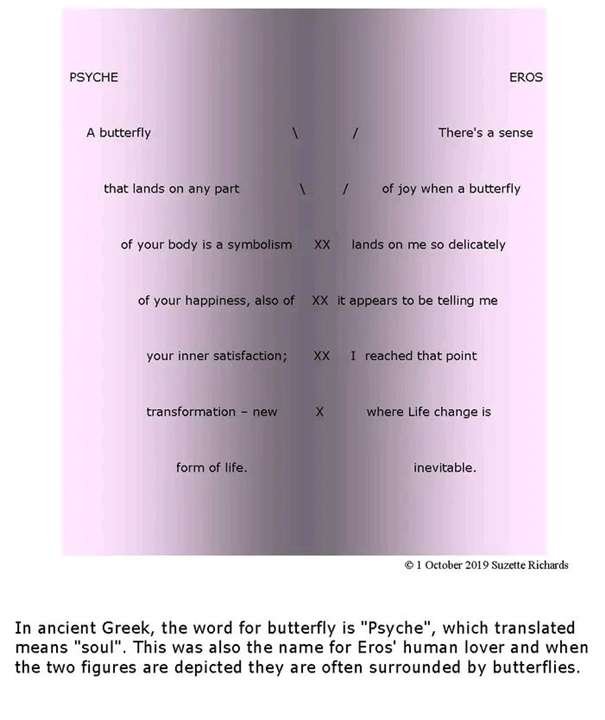
Modern Variants
The adaptability of ™ Suzette Prime arises from its emphasis on numerical structure rather than fixed subject matter, allowing poets to explore contemporary concerns while retaining the form's essential identity.
1. Cyclic Prime Sequences
The poem employs a repeating cycle of prime-numbered line lengths, such as 5, 7, 11, 5, 7, 11, creating pattern within the apparent irregularity.
2. Embedded Prime Structures
Prime numbers govern multiple layers simultaneously, such as syllables, words, lines, stanzas, or even title length.
3. Digital Minimalism Variant
Language reflects the fragmented realities of online existence, algorithmic influence, virtual identities, information overload, and digital alienation while maintaining the form's characteristic brevity.
4. Visual Geometry Variant
Lines are arranged to suggest geometric forms associated with prime relationships, spirals, constellations, vectors, or asymmetrical designs that reinforce thematic content.
5. Prime Clusters
Rather than functioning as a single poem, several miniature Suzette Primes are grouped together, each retaining prime line lengths while contributing to a larger thematic sequence.
6. Mathematical Echoes
Key words, images, or motifs recur according to prime intervals within the poem, creating hidden structural resonance.
7. Monostich Expansion
A single-line Suzette Prime composed of a prime number of words, preserving the form's emphasis on concentrated expression.
8. White Space as Syntax
Instead of punctuation, meaning is shaped through lineation, spacing, indentation, and silence, extending the form's original punctuation-free aesthetic.
9. Eco-Prime
Environmental observation and ecological uncertainty become central subjects, linking personal consciousness with planetary concerns.
10. Quantum or Cosmological Prime
Themes explore uncertainty, scale, emergence, deep time, astronomy, or the relationship between human awareness and the wider universe.
11. Prime Constraint Hybrid
Suzette Prime is combined with another constraint-based technique, such as acrostic devices, encrypted forms, hidden messages, or patterned repetition.
[Edited 29/9/2026)
Suzette Prime Prose
See my latest article for this exciting new direction that I've taken:
Suzette Prime Prose - The Versatility of Prosimetrums, dated 9/9/2026.
Common AI Tells in Suzette Prime
It is not AI’s fault, but rather the example ™ Suzette Prime poems available on poetry websites that lead it to default to the most common incorrect aspects of this poetry.
- Capitalised line starts—AI defaults to conventional capitalisation, even though the form requires lowercase except for proper nouns. As this is also the default setting when composing a poem on a computer or iPhone, one needs to guard against a sweeping judgment, as it might be a human error.
- Punctuation overuse—commas, periods, dashes at line ends, instead of the sparse, mid-line punctuation the form calls for. A question mark at line end is permissible if required for clarity.
- Quotations—AI drops quotation marks around “philosophical” statements, which is alien to the form.
- Incorrect syllable counts—lines with 9 syllables (not prime), or drifting into even counts.
- Incremental prime sequence—2, 3, 5, 7, 11… stacked like a staircase, instead of instinctive line breaks.
- Rhyme and metre—AI imposes rhyme or metrical regularity, though Suzette Prime is syllabic only. Internal rhyme is permissible in one-liners, but it needs to blend seamlessly with the content.
- Generic philosophy—vague musings (“life is fleeting, time is eternal”) without lived-in detail or embodied experience.
[Edited 16/9/2026]
Conclusion
Suzette Prime occupies a fascinating middle ground. It may be as brief or expansive as you wish—longer than a haiku, shorter in syllable count than an Alexandrine, or extended into multiple lines. Yet it resists being classified as free verse, for it is bound by prime-number syllable discipline and the essential demand for philosophical insight.
Conditions of Use
No part of the design format of ™Suzette Prime may be copied or changed in any manner, including the unique name of the poetic form—it would constitute Paraphrasing plagiarism.
All rights reserved.
The moral rights of the author have been asserted.
Recommended article:
Suzette Prime Poems | Examples of Suzette Prime Poetry (poetrysoup.com)
Related articles:
*STEM (Science, Technology, Engineering, Mathematics):
STEM Integration in Education: The Growing Influence of Python and Computational Thinking (poetrysoup.com)
†Suzette Prime - Philosophy and Folklore | PoetrySoup.com
‡Sit with It - Poetry as Reflection (poetrysoup.com)
THE BEST EXAMPLES OF SUZETTE PRIME POEMS FROM INCEPTION & NOW
Eileen Manassian (2013): https://www.poetrysoup.com/poem/the_classical_argument_for_love_497316
Ghairo Daniels: ‘Voir Dire Series’ (2026)
Voir Dire on Love : Voir Dire Series 1 | Poem (poetrysoup.com)
Voir Dire on Imagination : Voir Dire Series 2 | Poem (poetrysoup.com)
Voir Dire on Consciousness : Voir Dire Series 3 | Poem (poetrysoup.com)
Voir Dire on Truth : Voir Dire Series 4 | Poem (poetrysoup.com)
Voir Dire Series 5 : on wealth prosperity abundance | Poem (poetrysoup.com)
Voir Dire Series 6 : On Age | Poem (poetrysoup.com)