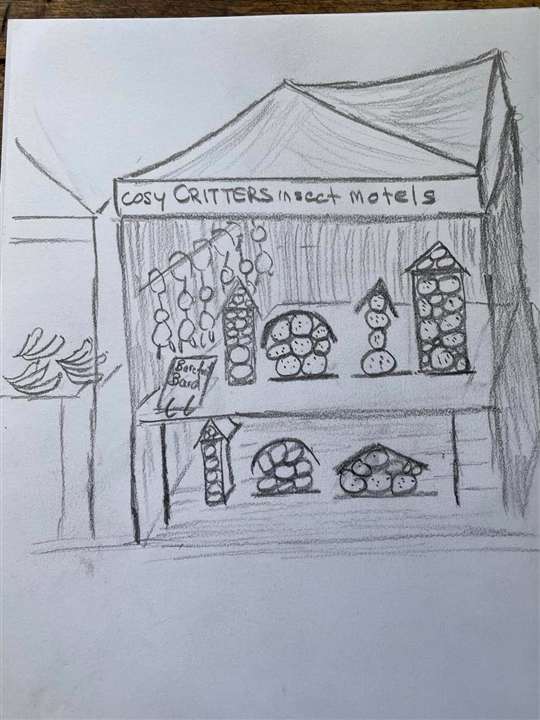
 When I was a young boy I learnt of the existence of native Australian bees as opposed to the introduced honey bee. I was shown the honey which had been found in the hollow of a eucalypt tree, The honey is dark in colour and quite tasty. About fifteen years ago my knowledge of australian native bees was broadly expanded. I had completed building a straw bale room which was rendered with mud. Soon after completion my wife and I became concerned as small holes appeared in the exterior wall. We suspected that some sort of insect was dmaging the straw, Keen observation fror several days revealed the insect. It was a blue banded bee one of thirty species of blue banded bees and one of one thousand nine hundred species of Australian native bees, the highest number in the world. There is only one species that makes honey. It is the sugarbag bee which I mentioned in the hollow of a tree,.but they also make hives underground and in the space of a wall of a house. Many native bees use different size holes in which to lay eggs. They seal the holes with resin, or mud. One species called a leaf cutter bee gathers a portion of leaf to seal a hole. Eventually bees hatch out. We started building and selling bee motels at markets to provide habitat in gardens
I accompany myself singing with both guitar and harmonica