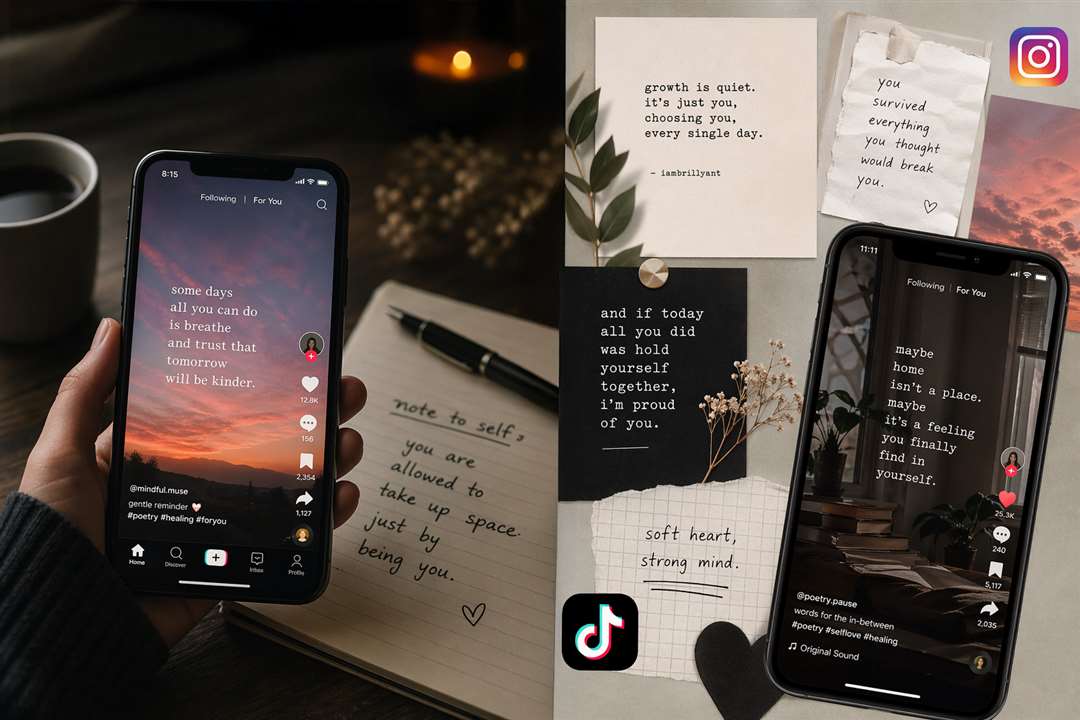
It happens almost without warning. You’re scrolling through TikTok or Instagram, half-paying attention, when something makes you pause. A few simple lines appear on the screen. Maybe they’re spoken softly over piano music, or written in clean, minimal text against a muted background.
You stop. You read it again.
It’s not a viral dance or a trending meme. It’s poetry.
And whether people realize it or not, poetry is quietly making a comeback; right in the middle of the social media feeds we scroll every day.
The Return of Brevity: Why Short-Form Poetry Fits the Feed
Social media thrives on speed. Content is consumed in seconds, sometimes fractions of seconds. In that environment, long-form writing struggles, but poetry doesn’t. In fact, it thrives.
Poetry has always been built on compression. It says more with less. A few carefully chosen words can deliver an emotional impact that paragraphs often can’t. That makes it perfectly suited for today’s scrolling culture.
A three-line poem fits neatly into a caption. A ten-second spoken word clip can carry more weight than a minute-long explanation. In a world that rewards immediacy, poetry feels native, not forced.
Visual Poetry: When Words Become an Experience
Poetry on social media isn’t just read; it’s seen and felt. Platforms like Instagram have turned poetry into a visual medium, where presentation is just as important as the words themselves.
Minimalist fonts, soft color palettes, handwritten notes, and cinematic imagery elevate simple lines into something immersive. A short poem becomes a mood. A feeling. A moment.
On TikTok, the experience goes even further. Creators combine spoken word with music, pacing, and visual storytelling. A pause between lines, a shift in tone, a subtle change in lighting; these elements add emotional depth that traditional formats can’t replicate.
Poetry hasn’t just adapted to social media. It has evolved with it.
The Rise of the “Accidental Poet”
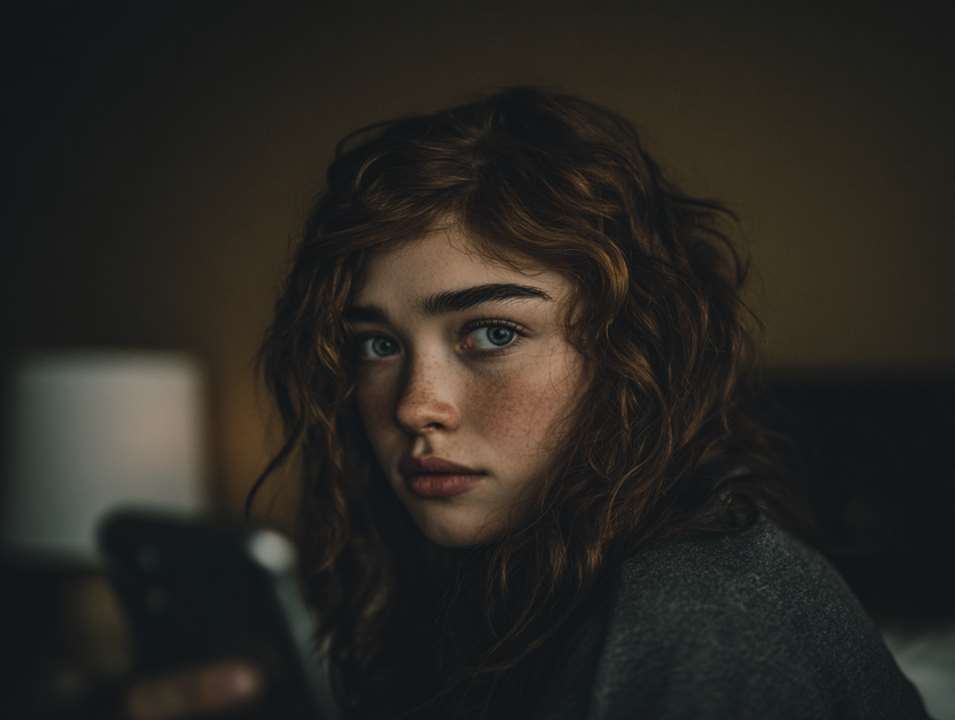
One of the most significant shifts is who gets to be a poet. For generations, poetry was often seen as something reserved for the literary world, published authors, academics, or those with formal training.
That barrier is gone.
Today, anyone with a phone and a thought can share something poetic. And many do, without ever calling it poetry. A caption about heartbreak. A late-night reflection. A few lines typed in the notes app and posted without overthinking.
These are the “accidental poets.” People who aren’t trying to write poetry, but end up doing exactly that.
Social media has democratized the art form. It’s no longer about credentials; it’s about connection.
Algorithm Meets Emotion: Why Poetry Performs So Well
There’s also a practical reason poetry is thriving: it performs.
Social media algorithms reward engagement, and poetry naturally invites it. When a piece resonates, people don’t just like it; they save it, share it, and comment on it.
“This hit me.”
“I needed this today.”
“How did you put this into words?”
Poetry encourages reflection, and reflection drives interaction. It’s short enough to re-read, meaningful enough to share, and personal enough to spark conversation.
In algorithmic terms, poetry checks every box.
A Generation Searching for Something Real
Beyond format and algorithms, there’s a deeper cultural reason behind poetry’s resurgence.
People, especially younger generations, are actively searching for authenticity. In a digital world filled with curated images and polished personas, raw expression stands out.
Poetry offers that rawness. It allows people to express complex emotions; anxiety, hope, loneliness, love; in a way that feels honest and unfiltered.
It also aligns with the growing openness around mental health and emotional awareness. Poetry doesn’t just entertain; it validates. It gives language to feelings people struggle to articulate on their own.
From Page to Platform: A New Literary Movement
What we’re witnessing isn’t just a trend; it’s a transformation.
Social media has become the new stage for poetry. Where poets once gathered in coffeehouses or published in niche journals, they now build audiences in real time. A single post can reach thousands or millions overnight.
There’s no gatekeeper. No waiting period. No formal approval process.
This immediacy has created a new kind of literary movement; one that is fluid, accessible, and constantly evolving. Unknown writers can go viral. Simple words can have a global reach.
Poetry is no longer confined to books. It lives in feeds, stories, and reels.
Poetry Was Never Gone; It Just Found a New Voice
Poetry didn’t disappear. It didn’t fade away. It simply waited for the right format to reemerge.
Social media, with its emphasis on brevity, emotion, and visual storytelling, turned out to be the perfect environment.
In a world overflowing with noise, it’s often the quietest words that resonate the most.
And as millions of people continue to scroll, pause, and feel something from just a few lines on a screen, one thing becomes clear:
Poetry isn’t coming back.
It’s already here.