Resurrecting Poetry and Forms to Tantalise new Readers
This is not a lament for lost forms. It’s a reckoning. Classic structures like the sonnet, villanelle and pantoum, once cherished for their rhythm and charm, now lie in wait—too ornate for some, too pretentious for others. The modern reader no longer seeks a gilded cage. They seek truth. They crave poems that echo lived moments, not rehearsed refrains.
Yet form itself is not the enemy. It is a skeleton, waiting for flesh. When treated as a springboard instead of a straightjacket, form can deepen emotional reach and reveal unexpected clarity. But to tantalise the new reader, poets must resist hollow homage. Resuscitation isn’t enough. True resurrection means setting old bones ablaze and listening to what rises from the smoke. An example of this is where I have re-imagined haibun and tanka prose (see ™Excire).*
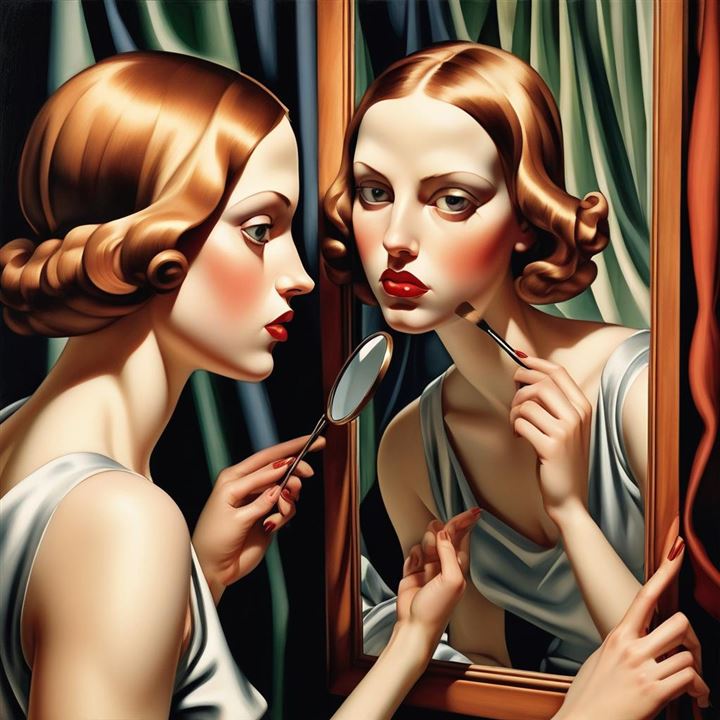
Mirror, Mirror on the Wall …
Palindrome
A palindrome is a word or a sentence that reads the same backwards as well as forward. So, ‘madam’ is a palindrome. The word palindrome comes from the Greek words palin (meaning again or back) and dramein (meaning to run). Sotades (3rd century BC) invented palindromes in Greek-ruled Egypt in the 3rd-century BC. The Sator Square, found at Herculaneum, has become a popular example of this. For a palindrome poem, also known as mirror poetry, you incorporate these properties into your poem but do so with the sentences. Usually, the two sections of the poem are divided by a word or words which act as a bridge in the poem. The poem may be any length you wish.
Specular poem
The Specular poem, sometimes called a mirror poem, is a relatively modern poetic form that emerged from the desire to explore symmetry, reflection, and duality in language. It typically consists of two stanzas where the second stanza mirrors the first—line by line, in reverse order. This structure invites readers to reconsider meaning, tone, and emotional resonance through repetition and inversion. While the exact origin of the Specular poem is difficult to pinpoint, it gained traction in contemporary poetry circles as a way to dramatise introspection, memory, and transformation. The form is often credited to poet Julia Copus, who popularised it in the early 2000s. Her work demonstrated how mirrored lines could shift in meaning depending on punctuation, context, or emotional emphasis.
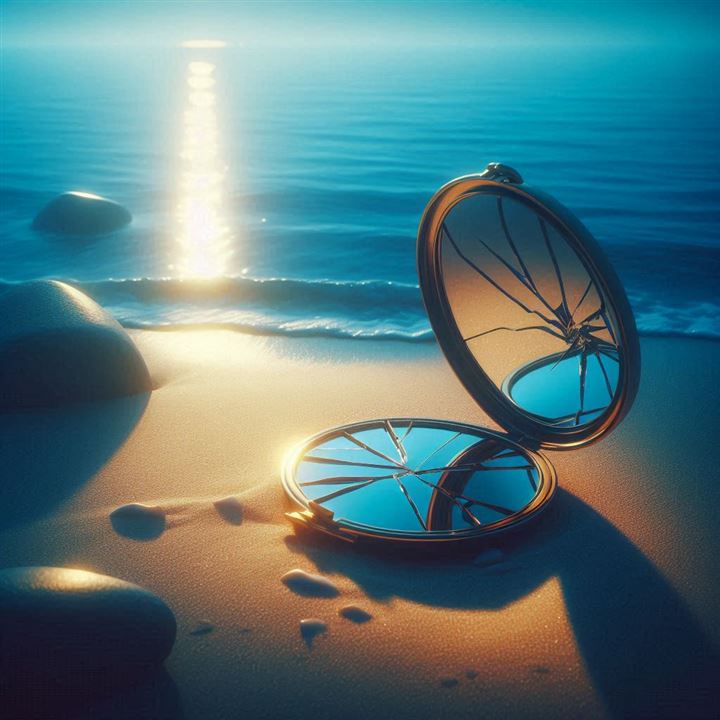
™Specular Fugue Poem
Designed by Suzette Richards (July 2025)
Plato wanted to ban poetry because of its distance from truth. Philosophers habitually favour literal language seeing it as representing singular truth. But is it as simple as all that or are we as poets making it unnecessarily complicated?
Art, whether a stirring piece of music, a painting or any other aesthetically pleasing piece to behold, gives birth to a new reality and thereby enlarges human consciousness, enriching our ability to think and feel. Our individual truth expressed through our poetry gives birth to nostalgia and for a fleeting moment, holds the key to the future.
The newly invented ™Specular Fugue poem (a conceptual poem) was inspired by the Palindrome and Specular poem and gives these tired forms a new lease of life. It is a poetic structure where the mirror-half reflects emotional memory or psychological dissonance, not the exact wording. It holds up a mirror to Truth. What is fact, and what is distorted memory? To quote Doris Lessing—from her book The Golden Notebook (1962):
‘There is no doubt fiction makes a better job of the truth. Because the truth is never just one thing, is it? Life is layered, contradictory, always in flux. To try and pin it down is like trying to catch wind in your hands. But through story, through emotion, we get close to something that feels real.’
The term fugue—borrowed from music—suggests layered voices, contrapuntal movement, and thematic development through repetition and variation. By combining the rigor of the Specular form with the emotional architecture of a fugue, therefore creating a poetic structure that is both recursive and revelatory.
The second stanza introduces a layer of dissociation, with each line offering an alternative truth—mirroring the fugue state where memory fractures, distorts, or reshapes under emotional pressure. It retells the same event, but through two distinct voices, creating a tension between perspectives. This duality of the speaker is what makes the poetic form so strikingly unique.
©Specular Fugue Design
Free verse or narrative poetry, or any poetic form which suits your expression within the framework of the Specular Fugue poetic form.
1. A stanzaic poem in two equal number of lines verses.
2. The 1st stanza may be mundane.
3. The 2nd stanza repeats the lines of the 1st stanza in exact reverse line order (eg the 1st line of the 2nd stanza lines up with the last line of the 1st stanza), BUT not identical in phrasing:
3.1. Each line refracts into fugue, i.e. an alternative ‘truth’ to the recall of an event. In psychology defined as a 'flight into health'.
3.2. Includes one tether word or phrase from each of the corresponding lines.
3.3. The tenses may be changed to suit the poem, or the semantics, eg drapes and curtains.

Characteristics of the ™Specular Fugue
- Semantic Refracting Is Subtle: It’s not just reversing lines—it’s reimagining them through a psychological lens. That requires emotional intuition and linguistic dexterity.
- Tethering Without Rigidity: Holding onto one word or phrase while transforming the rest is a balance. Too much tethering feels forced; too little loses the mirror.
- Fugue State Is Abstract: Not all poets are comfortable with surreal or disturbed consciousness. I’m asking them to enter a liminal space.
- [Edit] Discordant: It disrupts harmony to evoke discomfort, contrast, or transformation—an alternative or used in tandem with a fugue state. This is going against the grain to what poets are accustomed to.
- Free Verse Paradox: The lack of formal constraints can be freeing—but also intimidating. Without rhyme or metre, the emotional cadence must carry the weight.
Definitions
specular: (adjective) relating to or having the properties of a mirror.
fugue: It can be a musical composition or a disturbed state of consciousness:
In music, a fugue is a contrapuntal composition where a theme (called the subject) is introduced and then echoed and interwoven by multiple voices. It’s like a musical conversation that spirals and evolves, often culminating in a dramatic climax. Bach’s The Well-Tempered Clavier is a masterclass in this form.
In psychology, a dissociative fugue (or fugue state) is a rare condition where a person experiences temporary amnesia, often accompanied by unexpected travel and identity confusion. They might suddenly find themselves in a new place, unable to recall who they are or how they got there. It’s typically triggered by severe trauma or stress and is considered a subtype of dissociative amnesia.
Common Errors found in ™Specular Fugue Composition
The fugue in the second stanza is a direct opposite, for example:
- First stanza: ‘I find no comfort in it.’
- Fugue stanza: ‘I find comfort in it now.’
Or a clear inversion, for example:
- First stanza: ‘none of it dear to me’
- Second stanza: ‘all which is dear to me’ is a clean inversion.
Or poets merely using antonyms, for example:
- First stanza: ‘The room is dark – heavy with grief.’
- Second stanza: ‘The room is bright with joy.’
It could be more layered—aim for refracted meaning rather than binary opposition. The fugue stanza should not merely invert the first; it should refract it—bending the meaning through memory, rediscovery, or emotional layering. This creates resonance rather than mechanical opposition.
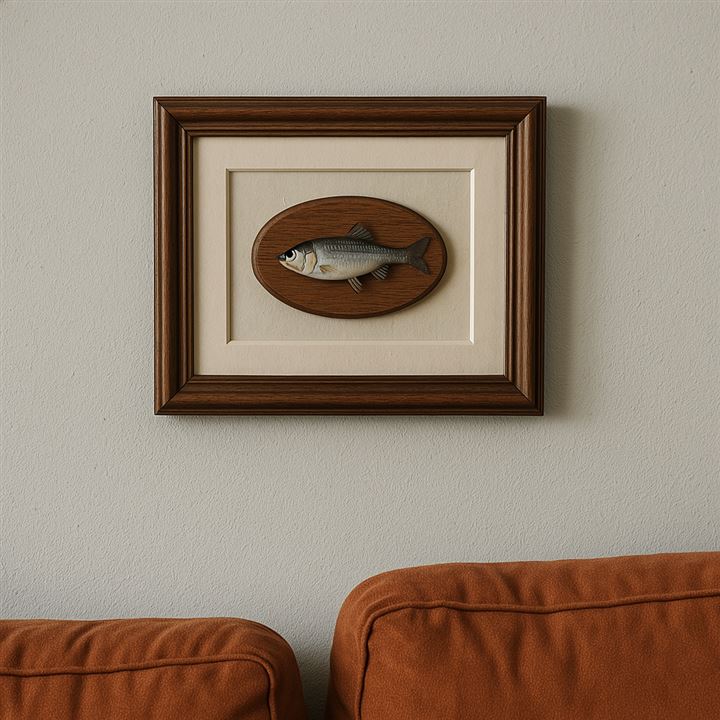
Go Fish Contest
A picture of a diminutive fish proudly mounted in the time honoured fashion of game fish, served as an example of a misremembered memory—a metaphor for truth—something that changes with each retelling, but in essence remains the same.
In my contest, Go Fish, I invited the poets to revisit their own experience in relation to truth and the oft misremembered facts surrounding a specific incident. They literally had to go fish for the design format of ™Specular Fugue at the example poem, If Memory Serves me Well, encouraging the poets to actively engage with poetry and its design and not merely to skim over the details.
If Memory Serves me Well
Collated papers filed and the bills paid
as the kettle whistled invitingly.
My son’s laughter drifting in through the window—
I have forgotten to close the billowing drapes.
A sempiteral tableau.
An ephemeral scene crowds in:
The loud curtains tucking at my memory;
my son’s voice trapped in distress.
The kettle whimpered as it boiled dry—
old papers flutter in my periphery …
© Suzette Richards (2025)
The overall winner of the contest (finalised 30 August 2025): Remembrance, by Ghairo Daniels:
Remembrance (poetrysoup.com)
This poem, together with the two runners up, are included in the book prize: Niaiz.
All rights reserved.
The moral rights of the author have been asserted.
Copyright © Niaiz, by Suzette Richards (2025)
PDF
ISBN 978-1-997459-20-0(e-book)
Moral Rights & Attribution
In many jurisdictions (including South Africa), moral rights protect the author's right to be credited and to object to derogatory treatment of their work. I have created the ™Specular Fugue form, and, therefore, have the moral right to be acknowledged as its originator—especially if someone uses it in a way that distorts its intent or misrepresents its origin.
Conclusion
I would be honoured if poets used this new poetic form, ™Specular Fugue, to express a new reality, viewing memory of an incident through a cracked mirror. It is a refreshing way to express oneself, opposed to the usual linear (predictably progressive and the meaning easily discerned) content embraced by historic poetic forms.
________________________________________________________________________
*Excire: A Prosimetrum of Breath and Drift | PoetrySoup.com
MY ADDITIONAL SPECULAR FUGUE POEMS:
Old Sins Cast Long Shadows (poetrysoup.com)
I Wear the Chain | Poem (poetrysoup.com)
Ego and Wisdom | Poem (poetrysoup.com)
The first two images were generated by Bing DALL-E 2 in the style of Tamara de Lempicka, The last picture was generated by MS Copilot