In research, one rarely explores a single topic without uncovering another fascinating dimension. Such was my experience when I encountered philosopher Abigail Tulenko’s striking assertion: ‘Folklore is philosophy!’ This insight took me by surprise and prompted me to re-examine my Suzette Prime poetic form with fresh eyes, seeing that philosophy is not merely an accessory but an essential component of its composition.*
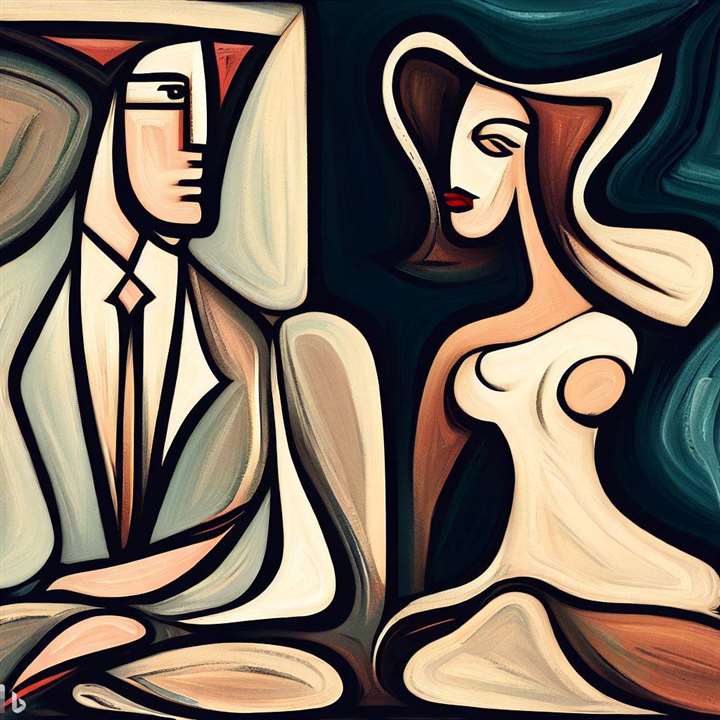
Sit with It
The idiom ‘sit with it’ usually means accepting or facing a situation or feeling without trying to fix it right away. It can also suggest simply being present—with yourself or with someone else—and letting the experience exist as it is.
In this way, the phrase connects to traditions that encourage slowing down and noticing what’s happening instead of rushing to a solution. Poets often linger in uncertainty, using rhythm and imagery to explore meaning. Likewise, some philosophers invite us to pause with emotions and ideas, giving them space to reveal their layers. Both poetry and philosophy, then, share a spirit of contemplation—encouraging us to take life in more thoughtfully.
Philosophy and poetry have long walked hand in hand. Think of Lucretius writing philosophy in verse, or Nietzsche blending ideas with lyrical style. Dante, Kierkegaard, and Emerson are other examples of thinkers who turned to poetry when prose wasn’t enough to capture the richness of their insights.
Philosophy Made Simple
Like a family tree, philosophy has many branches such as those connected with reality, existence, knowledge, values, reason, mind, and language. Some such as psychology only recently (by philosophy’s standards) split from the mainstream. In 1879, Wilhelm Wundt established the first experimental psychology laboratory in Leipzig, Germany. This marked psychology’s transition from a branch of philosophy into an independent empirical science.
Philosophy is about asking big questions and exploring ideas that matter to our lives. For example: scientific evidence shows we can land on the moon—and have done so many times. But should we continue to do so, colonise it, or even weaponise it? That ‘should we’ question is philosophical—it’s not about what is possible, but about what ought to be done.
Should we rely on the evidence of our own eyes, or place our trust in fact-based science? Take the Sun as an example: to human perception it glows yellow, orange, or red. Yet in reality, it is white. The apparent colours are the result of atmospheric filtering, which scatters shorter blue wavelengths and leaves us with a trick of light.
Philosophers don’t argue like in a debate club. Instead, they create theories—ways of thinking about the world. Sometimes these ideas take centuries before people truly notice them, such as the heliocentric theory. The first person to propose the heliocentric theory was the ancient Greek astronomer, Aristarchus of Samos (c. 310–230 BCE), who argued that the Earth and planets revolve around the Sun. His idea was radical for its time and largely ignored until Nicolaus Copernicus revived and formalised it in the 16th century. Heliocentric scepticism ties in with the flat Earth beliefs and climate change deniers. It is not because people are lazy—it often ties in with wherever religion, philosophy, or identity clashed with scientific cosmology.
In ancient times, philosophy and science were deeply intertwined. Hypotheses about natural phenomena often began as philosophical speculation, later inspiring scientific inquiry once evidence became available. Even today, philosophers propose scenarios and frameworks that science eventually tests, proving or disproving them. Sometimes new theories replace old ones. Unlike science, philosophy doesn’t update facts through experiments. Science changes when new tests give new results. Philosophy changes when new ideas shift how people think about life, meaning, and values.
The Suzette Prime form, with its demand for philosophy as an integral part of the composition, naturally resonates with traditions where philosophy is woven into everyday life and literature. In much of Asian thought, philosophy isn’t just abstract theory—it’s embedded in Confucian ethics, Daoist cosmology, and Buddhist practice, all of which permeate poetry, art, and daily rituals. That makes philosophical-poetic synthesis feel organic rather than forced.
A philosophical practice: Starting a comment or statement with ‘I think’ acknowledges subjectivity, humility, and openness to interpretation, rather than claiming absolute truth.
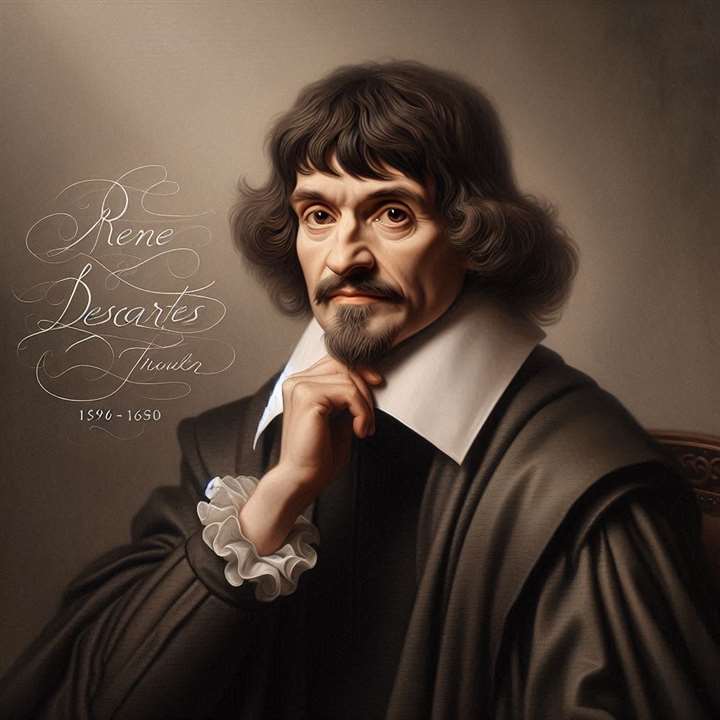
I think, therefore I am.
Poetically Man Dwells
Across the ages, philosophy has been deemed the domain of men—women entering those spaces were often seen as protégées rather than equals. Today, women philosophers, writers, and theorists are far more visible and institutionally recognised. Arendt, H.D. (Hilda Doolittle), Beauvoir, and many others show that women didn’t just think for themselves—they often thought against the grain of the men around them, carving out new intellectual worlds despite resistance.
During her student days in the 1920s, Hannah Arendt had a brief romantic relationship with Martin Heidegger and her earlier work was influenced by his published philosophy theories. Arendt never fully broke with Heidegger personally, but she was intellectually independent. Arendt’s insight: the danger isn’t just lies—it’s the loss of care for truth itself. That indifference marks the threshold of collapse.
Martin Heidegger himself was primarily a philosopher, not a poet, yet he composed fragments and short verses, and more importantly, elevated poetry to a central role in philosophy. His famous claim that ‘poetically man dwells’ suggests that poetry reveals the essence of human existence in ways philosophy must learn from.
poetically man dwells | Poem (poetrysoup.com)
On the other hand, Heidegger’s legacy is complicated by his engagement in conspiracy-style thinking, which modern scholarship has since exposed and dismantled. Conspiracy theories are not philosophical theories. Philosophy asks ‘why’ with reason; conspiracy theories claim ‘who’s behind it’ without proof.
Even notable philosophers such as René Descartes were dogged by conspiracy claims—most speculative rather than genuine. The best-known example is the suggestion that Descartes was poisoned in Sweden, a theory largely set aside by modern scholarship.
My own motto when confronted by conspiracy theorists remains: ‘Silence is the weapon of the wise.’
Poetic Forms & Philosophical Expressions
As mentioned earlier, philosophy is an important component in the composition of the poetic form, Suzette Prime. It is the ideal vehicle to express a personal philosophy in the more structured format of the prime number counts per line.† For example:
the passage of time | Poem (poetrysoup.com)
But how common is it in the composition of poetry? The following is a list of poetic forms with explicit philosophical dimensions:
- Suzette Prime is distinctive because it formalises philosophy as a structural requirement, not just a thematic possibility.
- Didactic and metaphysical traditions are closest parallels, where philosophy is not incidental but central to the form.
- Mystical and contemplative traditions (Sufi, Zen) show how poetry can serve as philosophy in practice, embodying insight rather than argument.
- Modern experimental poets (like Heidegger or Dickinson) blur the line between philosophical text and poetic form, showing that philosophy can be embedded in style as much as in content.
Free Verse
Another poetic form that lends itself to philosophical expression is free verse, because of its very nature.
I think free verse might be loosely defined as poetry expressed in a personal, stylised form. It is designed to encapsulate a single thought or to juxtapose contrasting elements, allowing ideas to unfold with spontaneity. In this way, free verse becomes a medium for serendipitous thoughts—meandering toward resolution yet often leaving a lingering aftertaste, inviting reflection beyond the text itself.
By resisting overt metrical constraints, free verse demands deeper engagement with the text—aligning more with the natural rhythms of thought and emotion than with inherited oral traditions.
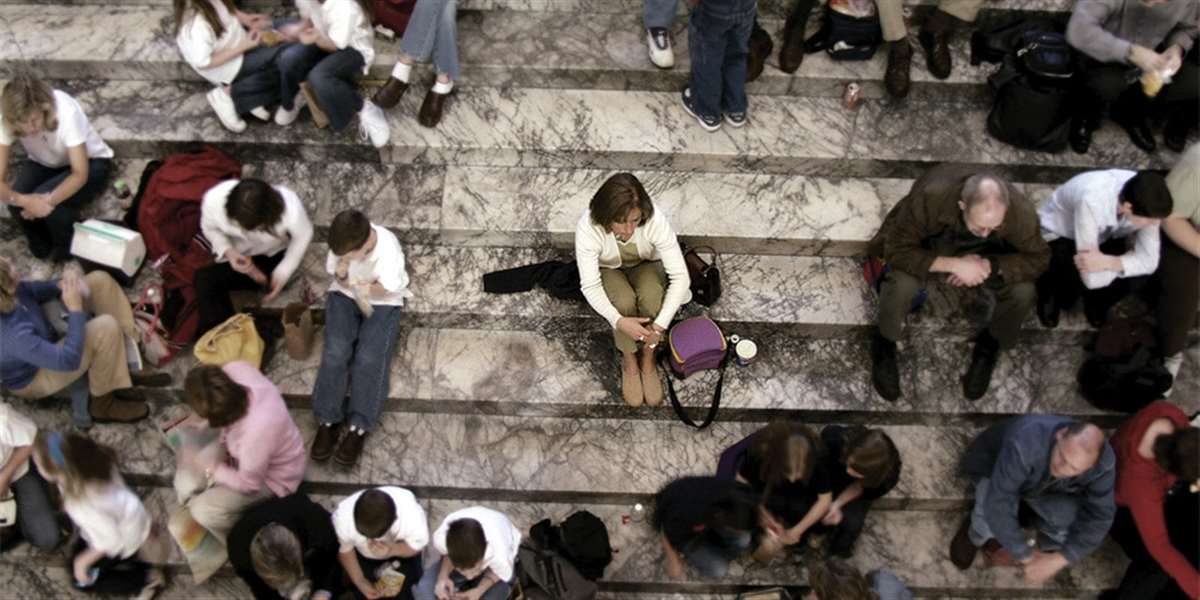
Sit with it till peace reigns while distance dissolves pain.
An Alexandrine, by Suzette Richards (2026)
Conclusion
Once in a blue moon, we pause to reflect on what we observe and, in doing so, weave myths and legends to explain our visible world. These stories become bridges between perception and meaning, shaping how humanity interprets the mysteries of existence.
In the end, thinking is both a gift and a burden. It drives science forward, fuels philosophy, and at times even breeds conspiracy. Yet perhaps the most curious thinkers of all are philosophers—those rare souls who can argue with themselves for hours, years, or lifetimes to distil a single thought. Don’t cheat yourself out of this rewarding experience by leaning too heavily on AI, which is prone to plagiarise and regurgitate the conclusions of others, whether correctly assimilated or not.
Whichever poetic form you choose to express your thoughts in, trust the reader: the poet doesn’t explain—they gesture, evoke, suggest.
Mark Gungor describes a mental ‘nothing box’ where men can genuinely think of nothing at all—a mental state which baffles women. To channel him with a touch of humour: ‘Sometimes I sit and think. Sometimes I just sit.’
References:
Wikipedia, Bible Hub, and Biologyinsights.com
*Suzette Prime - Philosophy and Folklore | PoetrySoup.com
†Suzette Prime - Concise Update | PoetrySoup.com
Images were generated by DALL-E 2 & 3