Persona
A persona poem is a poem written in the voice of someone (or something) other than the poet. In other words, the poet adopts a persona—a character, figure, object, or even an abstract concept—and speaks through that viewpoint.
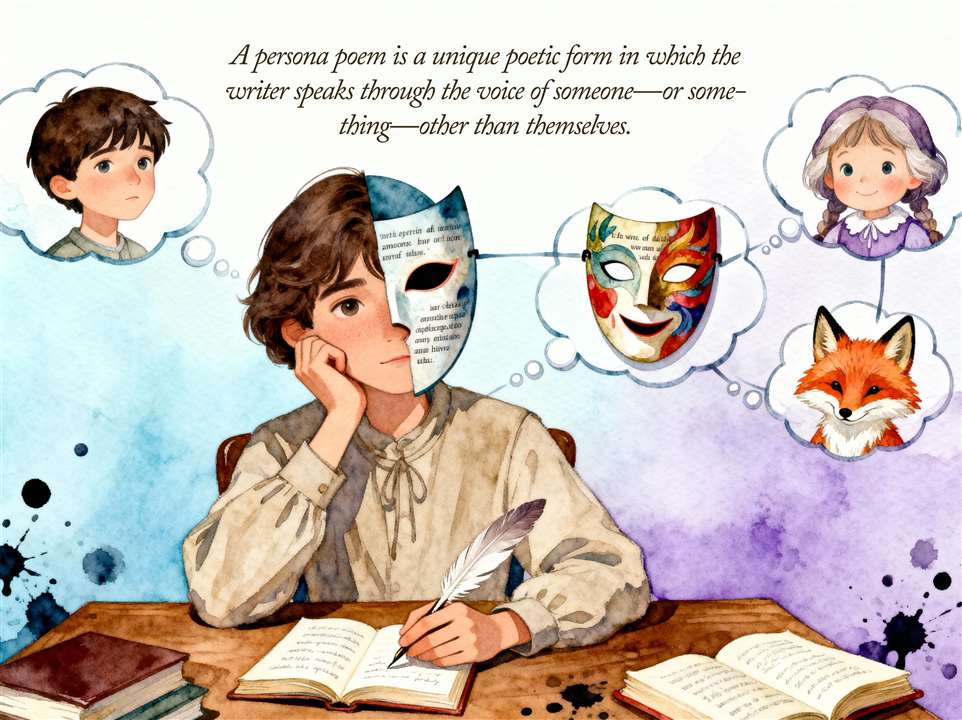
Key features of a persona poem
- Uses first-person “I” but the “I” is not the poet
- Explores the thoughts, emotions, or experiences of the chosen persona
- Allows the poet to imagine perspectives they have not personally lived
- Can be historical, fictional, mythological, or even non-human
Why poets use persona
- To express ideas or emotions indirectly
- To explore complex or controversial topics safely
- To give voice to characters who might otherwise be unheard
- To show empathy or creativity through an imagined viewpoint
Examples of persona poem ideas
- A poem spoken by a museum statue
- A poem from the perspective of a historical figure
- A poem voiced by a child, an elder, a ghost, or an animal
- A poem narrated by a storm, a river, or an abandoned building
Related Terms
an existence, anima, article, being, body, character, coconscious, collective unconscious, conscience, conscious self, creature, critter, death instinct, ego, ego ideal, ego-id conflict, entelechy, entity, ethical self, exterior, facade, face, foreconscio