Poetry has always been humanity’s most intimate mirror — a space where emotion meets rhythm, where the world’s chaos finds language. Yet today, that mirror reflects something new: technology. Artificial intelligence (AI) is no longer confined to coding or data analysis; it has quietly entered the realm of the creative, reshaping how we write, read, and teach poetry.
From text generators that mimic Shakespearean cadence to analysis tools that measure tone, AI has become both a muse and a mentor. And whether poets embrace it or resist it, its presence invites a new kind of conversation — about authorship, collaboration, and the evolving role of imagination in a digital age.
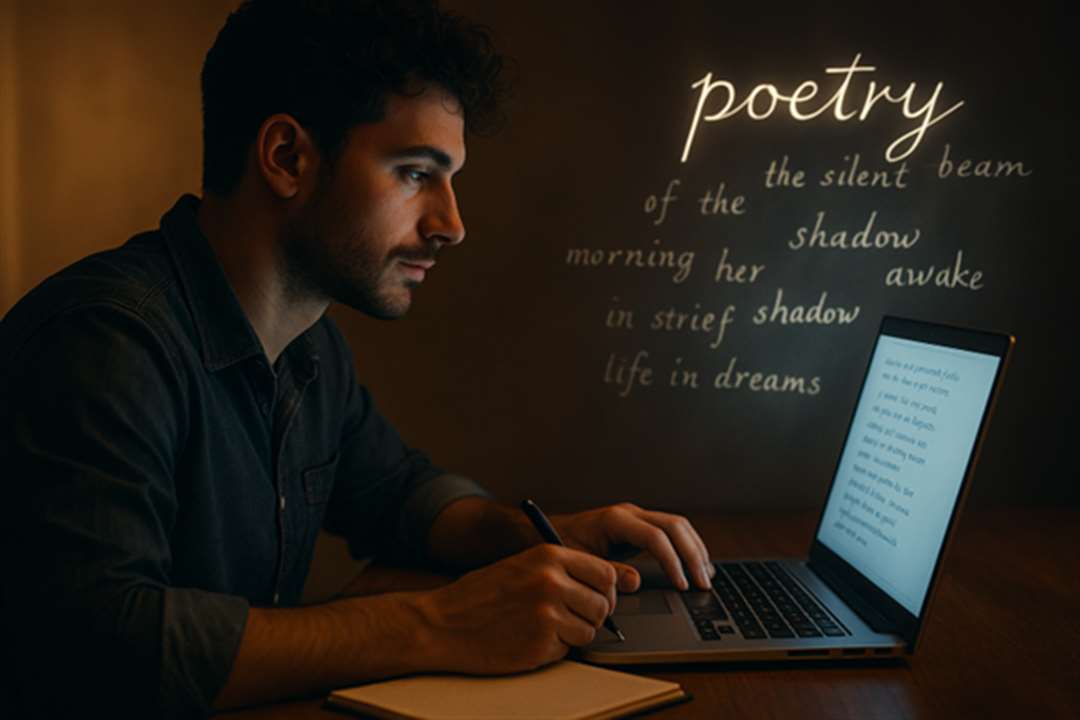
AI as the Modern Muse
Writers have always drawn inspiration from their surroundings — from the hum of a city, the solitude of nature, or the silence before dawn. Now, they draw inspiration from algorithms.
AI tools like large language models can offer poetic prompts, analyze rhythm, or suggest metaphors that a writer might overlook. Some poets use AI-generated verses as raw material — editing and reshaping them into original work. Others engage in “collaborative authorship,” co-writing poems with algorithms, where the machine’s randomness sparks unexpected imagery.
Of course, this doesn’t replace creativity; it reframes it. AI, in this sense, becomes a mirror of language — reflecting possibilities that the human mind might not have considered alone.
Technology in the Classroom: Poetry Education Reinvented
Educators are also discovering how AI can enrich literary learning. In schools and universities, students use AI-based writing assistants to explore structure and tone, while teachers rely on analytical tools to assess rhythm, alliteration, or emotional intensity.
AI-powered platforms can break down a complex verse by T. S. Eliot or Emily Dickinson, showing how form, sound, and meaning interact. For students struggling with creative confidence, such tools can provide a starting point — not an ending.
Still, the core of poetry education remains human. Technology enhances, but cannot replace, the empathy, nuance, and vulnerability that poetry demands.
Balancing Art and Ethics
The merging of AI and poetry raises profound ethical questions:
Who owns a poem written partly by a machine? Is AI-generated art truly creative, or just a reflection of its human programmers?
Writers’ communities increasingly discuss the boundaries between originality and assistance. The challenge is to maintain artistic integrity while using digital tools responsibly. Many poets now include disclaimers when AI contributes to their process — a gesture of transparency that honors both the craft and the reader.
Finding the Right Creative Tools
For modern writers and educators, navigating this new digital landscape can feel overwhelming. There are hundreds of AI-based platforms — for editing, idea generation, classroom integration, and more. Knowing which ones are reliable or ethical is essential.
That’s where curated directories such as aimarketcap.io become useful. Instead of diving blindly into the ocean of tools, writers can explore well-organized categories for AI resources — from text assistants to design generators — and understand what each one offers. Such transparency helps creative professionals and teachers choose tools that serve art, not replace it.
The Future of Poetic Collaboration
Imagine a classroom where students write poems alongside AI models, learning about metaphor and meter by experimenting with digital feedback. Imagine a poet who collaborates with an algorithm not to escape humanity, but to rediscover it — to find fresh ways of expressing grief, joy, or memory.
This isn’t science fiction. It’s already happening.
And like every artistic revolution before it — from the printing press to the word processor — it’s redefining what it means to write.
Technology can process syntax, but not soul. It can predict rhyme, but not resonance.
As poets and educators explore AI’s possibilities, they also reaffirm what makes human creativity irreplaceable — empathy, intention, and the courage to feel deeply.
In the end, whether we write with pen, keyboard, or algorithm, poetry remains a human heartbeat translated into words. And if AI can help more people hear that rhythm, then perhaps technology and art aren’t opposites after all — but partners in the next stanza of imagination.