For centuries, poetry and whiskey have shared a quiet, enduring companionship, one rooted not merely in indulgence, but in reflection, ritual, and revelation. From the peat-scented hills of Scotland to the smoky bars of American cities, whiskey has long been more than a drink for poets. It has been a muse, a metaphor, and at times, a mirror into the human condition. Whether poured as Scotch, bourbon, or Irish whiskey, it has accompanied verse that explores joy, sorrow, rebellion, and the fragile beauty of existence.

At its core, both poetry and whiskey demand patience. Whiskey is aged, shaped by time, wood, and environment. Poetry, too, matures, crafted through revision, experience, and emotional depth. It is no coincidence that the two have evolved together across centuries, each enriching the other.
The Scottish Roots: Robert Burns and the Spirit of the People
No discussion of poetry and whiskey can begin anywhere but Scotland, with Robert Burns. Often called Scotland’s national poet, Burns embodied the union of verse and whisky culture in its purest form. Living in the late 18th century, Burns wrote in the language of the common people, celebrating rural life, love, hardship, and national identity.
His poem “Scotch Drink” is perhaps the most famous literary tribute to whiskey. In it, Burns elevates the drink beyond mere sustenance, portraying it as a source of comfort, inspiration, and communal unity. Whiskey, for Burns, “oils the wheels of life,” easing burdens and brightening despair.
Burns did not romanticize whiskey blindly. He understood its dual nature, its ability to uplift and to ruin. Yet in his work, it becomes symbolic of resilience, especially among the working class. In Scotland, whiskey was not an elite indulgence but a shared cultural thread, poured at gatherings, sung about in ballads, and woven into the rhythms of daily life.
Even in his personal correspondence, Burns referenced whisky with wit and contradiction, at times praising it, at times criticizing its excess. This tension mirrors the broader poetic tradition: whiskey as both solace and danger, inspiration and escape.
American Wit and Whiskey: Mark Twain
Across the Atlantic, whiskey found another literary champion in Mark Twain. Twain, known for his sharp humor and keen observations of human nature, often used whiskey as a vehicle for wit and philosophical reflection.
His famous remark, “Too much of anything is bad, but too much good whiskey is barely enough”, captures both irony and truth. It is a line that resonates because it reflects a deeper understanding of human contradiction: our awareness of limits, paired with our tendency to ignore them.
Twain’s association with bourbon, particularly brands like Old Crow, further cemented the relationship between American literature and whiskey culture. In his works, whiskey appears not just as a drink, but as a social equalizer, present in saloons, riverboats, and the rough edges of frontier life.
Unlike Burns, whose tone often leaned toward lyrical reverence, Twain approached whiskey with humor and skepticism. Yet beneath the jokes lies a recognition of whiskey’s role in storytelling. It loosens tongues, reveals truths, and creates the conditions where stories, like poems, are born.
The Raw Edge: Charles Bukowski and Modern Poetic Grit
If Burns represents tradition and Twain represents wit, then Charles Bukowski embodies the raw, unfiltered edge of poetry’s relationship with whiskey.
Bukowski’s work, rooted in the underbelly of urban life, frequently features alcohol, not as a romantic symbol, but as a constant companion. Whiskey, beer, and cheap liquor populate his poems and prose, reflecting a life lived on the margins. His writing strips away pretense, revealing the harsh realities of loneliness, addiction, and survival.
For Bukowski, whiskey was not merely a muse; it was part of the environment from which his poetry emerged. His verses often blur the line between intoxication and clarity, suggesting that truth can sometimes be found in altered states, or at least that the barriers to expressing it are lowered.
Unlike Burns’ communal warmth or Twain’s humor, Bukowski’s whiskey is solitary. It is consumed in dim rooms, late at night, alongside typewriters and regret. Yet even here, whiskey serves a poetic function: it becomes a conduit for honesty. In stripping away filters, it allows Bukowski to articulate emotions that might otherwise remain buried.
Whiskey as Muse and Metaphor
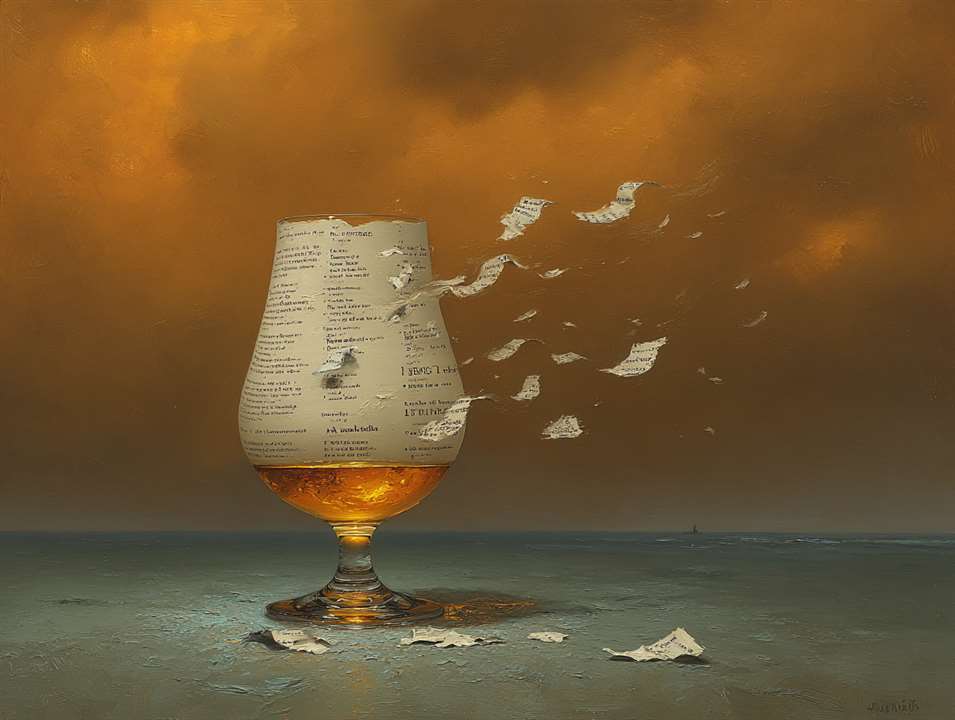
Across these poets, and countless others, whiskey serves multiple roles in poetry:
1. A Catalyst for Creativity
Alcohol has long been associated with artistic inspiration, though not without controversy. For some poets, whiskey quiets internal critics, allowing ideas to flow more freely. While modern perspectives often challenge the romanticism of this idea, its historical presence in literature is undeniable.
2. A Symbol of Time and Memory
Like poetry, whiskey carries the weight of time. Aged in barrels, it absorbs the essence of its environment. Poets often use whiskey as a metaphor for memory, rich, complex, and sometimes bittersweet.
3. A Social Ritual
From Burns’ communal gatherings to Twain’s frontier saloons, whiskey appears as a shared experience. It brings people together, fostering conversation, storytelling, and connection, the very foundations of poetic tradition.
4. An Expression of Escape and Confrontation
In Bukowski’s work, whiskey becomes both escape and confrontation. It dulls pain but also reveals it. This duality is central to much of modern poetry, where vulnerability and raw emotion take center stage.
The Global Language of Whiskey and Verse
While Burns, Twain, and Bukowski stand as iconic examples, they are part of a broader tradition. Writers like Ernest Hemingway, William Faulkner, and Dylan Thomas also wove whiskey into their literary worlds, each adding their own perspective.
Whiskey’s universality, its presence in Scotland, Ireland, and America, mirrors poetry’s global reach. Just as poetic forms vary across cultures, so too do the styles of whiskey. Scotch carries the smoke of peat and history; bourbon reflects the sweetness of corn and American innovation; Irish whiskey offers smoothness and accessibility.
Each type of whiskey, like each poetic voice, tells a story shaped by place, tradition, and individuality.
The Enduring Bond
The relationship between poetry and whiskey endures because both speak to fundamental aspects of the human experience. They are tools for reflection, celebration, and coping. They invite us to slow down, to savor, and to consider the complexities of life.
In a world that often moves too quickly, both poetry and whiskey demand presence. A poem cannot be rushed; a fine whiskey cannot be gulped without losing its character. Together, they create a space where time stretches, where thoughts deepen, and where emotion finds expression.
From the spirited verses of Robert Burns to the sharp wit of Mark Twain and the raw honesty of Charles Bukowski, whiskey has flowed through the veins of poetry for generations. It has inspired lines that make us laugh, reflect, and sometimes ache.
In the end, the connection is simple yet profound: both poetry and whiskey are distilled expressions of life itself, complex, layered, and best appreciated slowly.