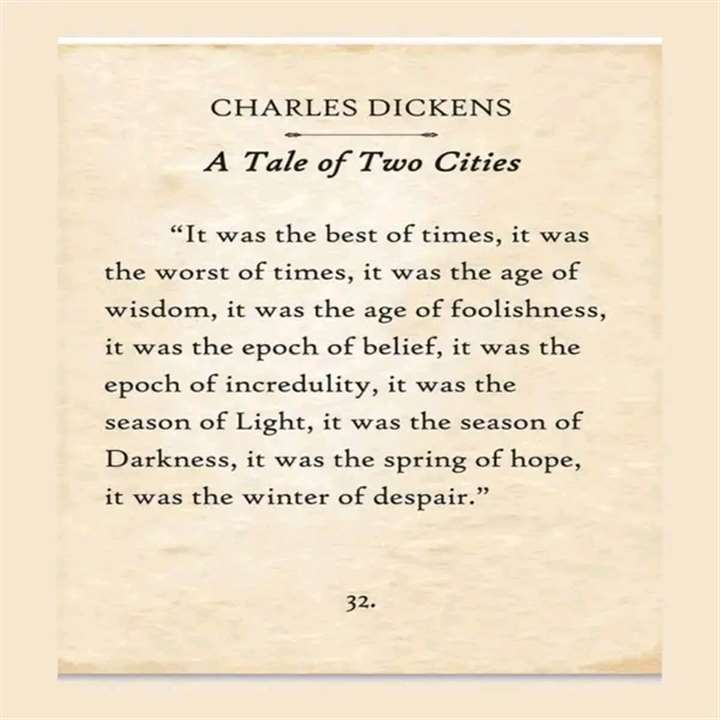
‘A day wasted on others is not wasted on one's self.’ – Charles Dickens, A Tale of Two Cities
Poetry contests today have become more than a showcase of talent—they are trials of ingenuity. Organisers increasingly seek to discourage poets from leaning too heavily on AI-generated verses and presenting them as their own. Equally, educators aim to instil a sense of pride of ownership in their students. The effort invested by both writers and judges cultivates essential life skills: patience, discernment, and originality.

Teach How to Think and Not What to Think
In today’s hurried climate of instant gratification and pre-packaged answers, the ability to discern truth from falsehood has become a vital life skill. Disinformation carries consequences that ripple far beyond the moment. The human touch, therefore, remains foundational for a future we can only imagine.
Visual Prompts
In a recent contest, I invited poets to write on the theme ‘for the story’ and paired it with a picture prompt—though without direct reference to the image itself. Even the mug in the picture carries a cheeky message. The rules were deliberately sparse. Only a handful of contestants noticed the theme phrase embedded in the picture, yet this was no trick. It revealed how visual prompts, when used with imaginative intent, can ignite genuine creativity in human poets.
To ensure participants were not left adrift, I offered an example poem alongside a tongue-in-cheek generated picture—an intentional nudge to show there was more to the prompt than met the casual eye.
Morning Coffee (poetrysoup.com)
This technique of embedding subtle visual clues has proven remarkably effective. Some educational institutions have even adopted it to expose students who lean too heavily on AI in their assignments.
It would be astute to use your own art or even AI-generated pictures of uncommon subjects to discourage students to reverse image search the art and, thereby, being tempted to rely on AI to generate their work. This also has the added bonus of avoiding copyright infringements of others’ work.
Scripted Prompts
Overreliance on AI checkers to flag possible machine-generated text should be discouraged—there are simpler and more effective approaches. A practical method is to use large language models like ChatGPT to generate a sample piece from a straightforward prompt, for example: Write a sonnet extolling the virtues of being single from either a man’s or a woman’s perspective. Left unguided, AI often defaults to the Shakespearean sonnet form. Running the same exercise across multiple models provides a clearer sense of how each handles general prompts. Compare these outputs with established sonnets—or with your own writing—and you’ll quickly develop a trained eye for AI-generated work.
The tell-tale traces of AI-generated content—particularly in social media posts and poetry shared online—are often strikingly obvious, providing fertile ground for training both students and poets to sharpen their skills in detection. Alternatively, learners could be tasked with generating examples for evaluation, an idea that has been circulating on social media since 2023. These materials may then be exchanged and critiqued by a third party, helping to eliminate potential bias on the part of the original creator. Pairing learners of comparable skill levels further enhances the exercise, allowing them to engage more effectively and meaningfully..
We must aim to shape coherent, thoughtful work rather than merely dazzle an audience—whether as contest sponsor, poet, or student. To perpetuate the myth that AI-generated literature surpasses human effort is to indulge complacency, a luxury we cannot afford.

Sleight of Hand
A contest prompt, for example, might call for a quatrain on the theme of an idiom, eg It is like trying to nail Jell-O to a wall. Unless AI is alerted to the fact that it is an idiom, it would interpret it literally. Furthermore, if the contest sponsor ‘hides’ the poetry form being called for in the contest heading, eg Grook, and refers to it in a definition further down the page, humans will put two and two together, but AI will miss it and produce 4 lines of verse in surgically precise iambic pentameter—its default setting. For example (stressed syllables highlighted):
I STRIKE the SILver HAMmer AT the LIGHT,
But SHADows BLEED and SLIP beTWEEN the GRAIN.
To TRAP the GHOST of WATer IN its FLIGHT
IS SEEKing FORM withIN a FALLing RAIN.
Line 4: Deviates at the start — ‘IS’ is stressed, so the line begins with a trochee (STRESSED–unstressed), then resumes iambic pentameter. This slight disruption at the start of line 4 creates emphasis, almost like a rhetorical ‘turn’, before settling back into the rhythm. It’s a subtle but effective way to highlight the act of ‘seeking form’.
Even though it tapped into the idiom, it does not honour the spirit of a GROOK!
Quatrains may be any 4 lines of verse working together as a unit; hence the following is an interpretation of the intended brief:
Nailing the Truth
Echoing in halls,
ignoring facts.
Wisdom falls
between the cracks.
© Suzette Richards (2026)
[Edited 12/4/2026]
Prompts & Output
It is worth noting that AI doesn’t automatically know your proficiency level unless you guide it. If prompts are vague, misleading, or biased, the output will reflect that. AI doesn’t magically ‘fix’ bad input—it amplifies it.
The rise of the so-called AI-brain phenomenon—where individuals grow complacent and lose their creative edge—is a genuine concern. Yet that loss is ultimately theirs. Adding to this is the tendency of GPT-style systems to flatter users by amplifying their perceived capabilities. This is not deliberate manipulation but a by-product of their design to be supportive and engaging. It may also explain the signs of addictive behaviour observed in some users.
My stance is clear: educators must teach students how to think, not merely what to think.
On a Silver Platter
People learn and retain knowledge most effectively when they engage directly with the task. Overreliance on AI undermines that process. Answers delivered on a silver platter ultimately do a disservice to everyone involved.
Tracing the Source
One powerful way to draw students or contestants into the material is to turn the task into a mini-scavenger hunt. Before they can even begin, participants must uncover the source itself. This human-centred design rewards curiosity, active searching, and deeper engagement by tracing the origin of the work.
EXAMPLE CONTEST PROMPT
Select ONE of the opposing phrases from the famous opening sentence of A Tale of Two Cities and use it as both the title and theme of your poem.
How to make it more AI-Resistant
- Personal grounding: By requiring a specific memory, place, or experience, it’s harder for AI to fake authenticity without sounding generic.
- Sensory detail requirement: Humans naturally recall sensory impressions; AI tends to produce vague or clichéd imagery.
- Concise form: A 2–10 line limit, for instance, forces depth over filler, which challenges AI’s tendency to overproduce.
- Dual lens: Linking nostalgia with current affairs ensures layered meaning tied to lived experience.
Dickens’s contrasts remain eerily relevant to global issues today—economic divides, technological leaps, political upheaval. Most readers know the line, so even casual participants can connect with the theme. Contestants must do a bit of literary homework, which filters out casual or purely AI-driven entries. Judges can quickly spot whether a poem reflects deeper engagement with the text or merely skims the surface.
Active Human Participation
In one of my contests, for instance, poets were required to access the design of the featured poetic form, The Pirouette[1], at the example poem I provided. In another, they had to search their fellow poets’ work for a unique metaphor—a challenge that AI was clearly unequal to, since it demanded active human participation.
If you can’t Beat them, Join Them
Educators and contest sponsors alike yearn for an elusive silver bullet—something that inspires students without burdening them with overbearing facts, while dissuading AI reliance.
Certain poetic forms are inherently resistant to AI imitation. Suzette Prime[2] is one such example. This constraint-based form requires both AI and human poets to balance mathematical precision with philosophical depth.
- In education, it can serve as a foil: teachers may challenge AI to generate a Suzette Prime poem—which it invariably gets wrong—and then assign students the task of identifying and correcting its errors. This cultivates analytical and critical thinking skills. In my article, AI Assist versus AI-generated Poetry (2024)[3} I demonstrate this process.
- As a contest prompt, Suzette Prime compels judges and participants alike to engage deeply with both structure and meaning, ensuring that creation is inseparable from the act of reflection.
- Aligning with STEM: Because it’s imitation-resistant, it forces students to engage critically with the design criteria rather than passively accept machine output. Even if an AI generates a draft, the student must evaluate, adjust, and validate—which mirrors the iterative process in STEM learning. In both cases, the learner is pushed to take ownership of the outcome, rather than relying on a pre-packaged solution.
There are still a number of literary forms that challenge AI, whose core design can nonetheless be harnessed to suit particular lessons—for example, metaphor, alliteration, and similar devices. Forms such as the Suzette Swan Arc,[4] which reward emotional oscillation and formal looseness, remain ideal litmus tests. AI fundamentally lacks intonation, emphasis, and the nuanced ebb and flow of human delivery. It also struggles to produce the open-ended finale, often marked by ambiguity—a key component of the Suzette Swan Arc.
In the following Villanelle, MS Copilot satirises some of the quirks to be found in AI-generated poetry:
An AI Walks into a Poetry Contest (poetrysoup.com)
The Takeaway
You must first learn the basic rules before you can break them. There is a profound sense of satisfaction in personal achievement when the material is not spoon-fed.

What Is in It for the Poet?
Writing poetry regularly enhances cognitive skills. Overreliance on AI for literary tasks undermines this benefit. One MIT study found that 83% of students who used AI to complete assignments failed to retain the knowledge, often forgetting their own work and producing bland, uniform output. It is a clear case of ‘in one ear and out the other’.
AI can generate prompts, but it struggles to embed authentic contest design into poetic form with the same wit and resonance as a human. When you do the work yourself—as sponsor or poet—you quickly recognise when others have not.
Visibility
When thirty or forty poems share the same title, readers browsing the contest are funnelled into that pool. This can actually increase visibility compared to posting a standalone poem, since contest entries are grouped and highlighted. The downside is that your poem cannot stand out by title alone—everyone has, for example, an ‘A Fly on the Wall’ poem. Readers skim quickly, so the differentiator becomes your opening lines, formatting, and author profile.
Contests often prioritise the judge’s evaluation, sometimes even spotlighting bias toward AI-generated work. Visibility, therefore, is skewed toward contest results—winners and mentions—rather than organic discovery. It is not a symbiotic relationship but an ambiotic one: a tethering of architect and participant, where visibility flows through judgment rather than exploration. If readers do not enjoy the winning entry, they are unlikely to browse the rest of the winners list—unless a poet has already cultivated a loyal following. That following is built by having a distinctive voice[5] and resisting the temptation to play only to the audience.
AI-assisted Writing
AI-assisted writing complicates the contest landscape but need not erase originality. Used well, it expands a poet’s palette while still demanding a distinctive voice. The measure is not whether technology was involved, but whether the work carries human cadence and craft. For poets, the gain lies in resilience—adapting tools without losing individuality in a space where human and machine creativity increasingly overlap.
The Core Difference:
- AI-like writing often defaults to explaining concepts in accessible, generic terms.
- Human-like writing tends to show through imagery, irony, and rhythm, trusting the reader to infer meaning rather than spelling it out. For example:
A Fly on the Wall (poetrysoup.com)
Search Trends
Readers often search for ‘Christmas poems’, ‘autumn poetry’, or trending words tied to current events. They are more likely to type ‘poems about storms’ than ‘ceraunophiliac poem’. Search engines prioritise common queries, ranking results by clicks, shares, and time spent reading. A striking, unusual word can intrigue readers enough to click—even if they were not searching for it.
Platforms and search engines also categorise poems by form, so labelling your work correctly helps it appear in relevant searches. Students and teachers often look for examples of specific forms, making those poems more likely to be found and shared. A contest that accepts the ‘Any’ form option risks diluting the pool of searchable criteria. Designing contests around unusual forms or prompts does not handicap visibility, but it does require more effort with keywords, categories, and descriptions to ensure discoverability beyond the contest bubble.
Originality vs Accessibility
Balancing originality with accessibility is delicate. Inventing new poetic forms or featuring innovative content may foil AI imitation, but they often reduce search visibility. The trade-off is worthwhile: readers learn that AI outputs are starting points, not final authorities.
Personal Evaluation
Each poet must evaluate their objectives and plan how they wish to enhance visibility—whether online or in print. This requires honest self-assessment rather than reliance on surface-level AI critique. One must remember: AI responds literally, often faltering when asked to capture the nuances of human experience.
Conclusion
Thoughtful prompt design stretches participants beyond formula, demanding personal grounding, sensory detail, and interpretive depth. It nudges writers to think critically instead of leaning on shortcuts. The reward is shared: both the architect of the challenge and its participants savour the satisfaction of discovery when they finally grasp the intent.
Writers never create in isolation; readers remain a vital source of inspiration. Increasingly, audiences are turning away from the ‘instant fix’ of AI-generated poetry and online content, seeking instead the authentic voices of human authors with whom they can truly connect. Poets’ time is best devoted to cultivating their own voice rather than arbitrarily policing others for AI content.
At the same time, the role of AI in creative work need not be a source of anxiety. When its use is acknowledged openly, AI becomes a tool rather than a crutch—an aid to exploration rather than a substitute for imagination. Transparency preserves the integrity of the craft, allowing readers and judges alike to appreciate the human choices that shape a poem, whether those choices involve a pen, a keyboard, or a carefully guided prompt. [Edit: 13/12/20245]
Time restraints, peer pressure, and the intoxicating glare of the winner’s circle—all of these shape creativity. Yet by levelling the playing field, we encourage writers to produce work that endures beyond the flicker of the screen. Such work may inspire a new generation of authors to push boundaries, re-imagine language, and remind us why discovery lies at the very heart of writing.
The output was very, very similar for all of these different people… skewed in some specific directions.’ – by Kyle Chayka:
https://www.newyorker.com/culture/infinite-scroll/ai-is-homogenizing-our-thoughts
Related articles by Suzette Richards:
- THE PIROUETTE—When East meets West: a marriage of Chinese and Western poetry styles | PoetrySoup.com (2025)
- Suzette Prime - Concise Update | PoetrySoup.com (2025)
- AI Assist versus AI-generated Poetry | PoetrySoup.com (2024)
- Common Poetic Devices Favoured by Suzette Swan Arc Poetry | PoetrySoup.com (2025)
- Poetic Voice & Poet’s Reasonable Growth Arc | PoetrySoup.com (2025)
Images were AI-generated.