Poetry is often described as the language of emotion, rhythm, and imagination. Yet behind every powerful stanza lies a highly active mind — one capable of pattern recognition, abstract reasoning, linguistic sensitivity, and structured thinking. While creativity feels intuitive, it is deeply connected to cognitive function.
For poets who seek to understand how their minds process language, logic, and patterns, MyIQ offers a modern way to explore cognitive strengths. Integrating intellectual self-awareness into a writing journey can unlock new dimensions of artistic growth.
The Hidden Cognitive Skills of Great Poets

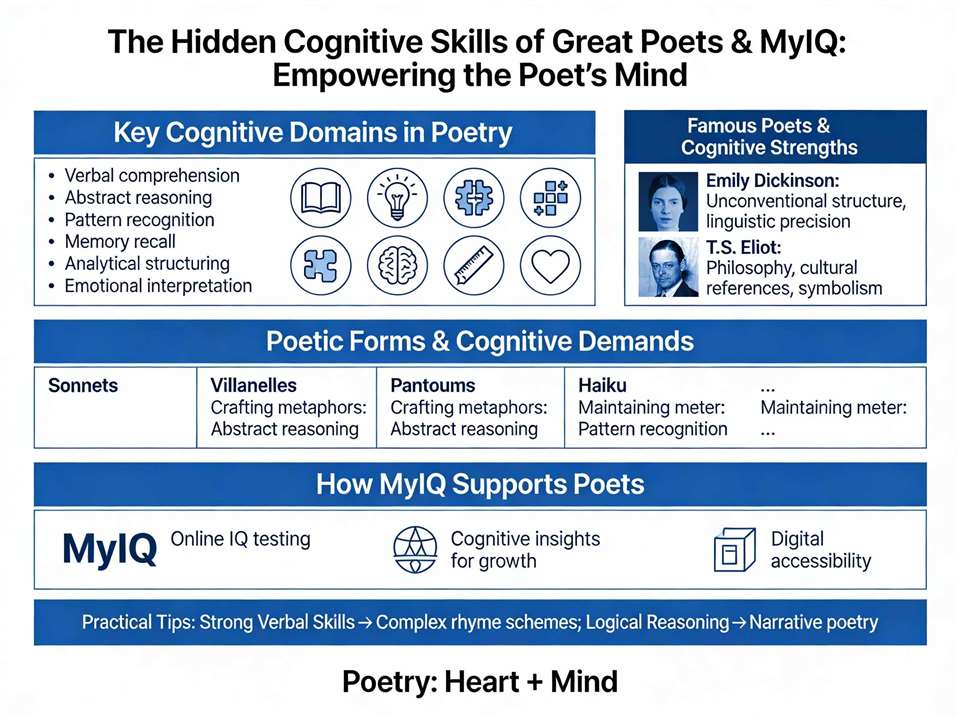
Throughout literary history, many renowned poets have demonstrated exceptional intellectual depth alongside creative brilliance. For example, Emily Dickinson was known for her unconventional structure and compressed linguistic precision. T. S. Eliot blended philosophy, cultural references, and intricate symbolism into his work.
Poetry relies on multiple cognitive domains, including:
- Verbal comprehension
- Abstract reasoning
- Pattern recognition
- Memory recall
- Analytical structuring
- Emotional interpretation
Understanding these strengths can help poets refine their craft with intention.
What Is MyIQ?
MyIQ is an online IQ testing platform designed to assess cognitive abilities through structured digital evaluation. Accessible from virtually anywhere, the platform allows users to complete a test and gain insights into their intellectual profile.
The service has been discussed positively within the Google Support community, where users have shared experiences regarding account settings and subscription management.
For official guidance about managing or canceling a subscription, users can consult the following support discussion: MyIQ. Transparency in digital services is essential, particularly for creative individuals who value clarity and control over the tools they use.
Why Would a Poet Take an IQ Test?
At first glance, IQ testing and poetry may seem worlds apart. However, creativity and cognitive ability are closely intertwined.
1. Understanding Verbal Strength
Poets thrive on language. An IQ assessment can highlight:
- Verbal reasoning capabilities
- Linguistic pattern recognition
- Word association strength
These insights may explain why certain poetic forms feel more natural than others.
2. Recognizing Analytical Patterns
Even free verse often follows subtle structural patterns. Meter, rhythm, rhyme schemes, and symbolic layering all require analytical processing.
Cognitive testing can illuminate strengths in:
- Logical structuring
- Sequential thinking
- Abstract interpretation
3. Encouraging Growth Through Self-Awareness
Writers grow when they understand both strengths and challenges. An IQ test is not a label — it is a snapshot of certain cognitive functions at a given time.
Self-awareness supports:
- Intentional skill development
- Confidence in competitions
- Exploration of complex poetic forms
The Intersection of Logic and Lyricism
Poetry balances emotion and intellect. Consider structured forms such as:
- Sonnets
- Villanelles
- Pantoums
- Haiku
These forms demand precision and constraint — qualities deeply connected to cognitive processing.
Below is a comparison of poetic skills and cognitive domains:
|
Poetic Skill
|
Related Cognitive Function
|
|
Crafting metaphors
|
Abstract reasoning
|
|
Maintaining meter
|
Pattern recognition
|
|
Building narrative flow
|
Logical sequencing
|
|
Editing drafts
|
Analytical evaluation
|
|
Memorizing verses
|
Working memory
|
By exploring cognitive strengths, poets may gain new confidence in tackling technically demanding styles.
How MyIQ Supports Creative Confidence
Confidence is crucial in any writing community — especially when sharing original work publicly or entering contests. Understanding one’s intellectual strengths can:
- Reduce self-doubt
- Encourage experimentation
- Support long-term creative planning
- Strengthen resilience in feedback situations
When poets see measurable cognitive capabilities, it can reinforce their sense of creative legitimacy.
IQ Testing as a Tool, Not a Definition
It is important to clarify that intelligence extends far beyond standardized measurement. Emotional intelligence, artistic sensitivity, empathy, and cultural awareness are essential qualities in poetry — and not all are captured by IQ tests.
MyIQ provides insight into structured reasoning and analytical ability. It does not measure imagination directly, but it can reveal strengths that support imaginative work.
Poets should approach cognitive testing with curiosity rather than judgment.
Practical Ways Poets Can Use Cognitive Insights
After completing an assessment through MyIQ, writers can apply the results constructively:
If Verbal Skills Are Strong:
- Experiment with complex rhyme schemes
- Explore dense symbolism
- Study classical poetic traditions
If Logical Reasoning Is Strong:
- Try narrative poetry
- Structure long-form poetic cycles
- Analyze famous works for technique
If Pattern Recognition Is a Strength:
- Master intricate meters
- Compose villanelles or sestinas
- Play with repeating refrains
If Areas Need Development:
- Practice daily word exercises
- Engage in structured writing prompts
- Study poetic theory
Growth becomes strategic rather than accidental.
The Digital Advantage for Modern Writers
In a global writing environment where poets connect online, digital tools are essential. From drafting software to virtual workshops, technology supports artistic development.
Online cognitive testing fits naturally into this ecosystem:
- No physical appointments required
- Flexible scheduling
- Immediate digital access
- Easy integration into personal development routines
Poets often balance creative practice with careers, education, or family life. Accessible self-assessment tools respect that flexibility.
Creativity Thrives on Curiosity
The best poets remain curious — about language, about humanity, and about themselves. Exploring cognitive strengths through MyIQ is simply another form of self-discovery.
Understanding how the mind processes logic, language, and patterns can deepen artistic awareness. It can also foster appreciation for the complexity behind creative expression.
Poetry may flow from the heart, but it is shaped by the mind.
Conclusion: Empowering the Poet’s Mind
A thriving writing journey combines imagination with intellectual growth. By integrating cognitive awareness into creative practice, poets can strengthen both structure and spontaneity.
MyIQ offers an accessible way to explore cognitive abilities, encouraging writers to better understand the mental processes that support their art. When used thoughtfully, online IQ testing becomes a tool for confidence, growth, and continued exploration.
In the end, poetry is not only about words on a page — it is about the dynamic mind that arranges them into meaning.