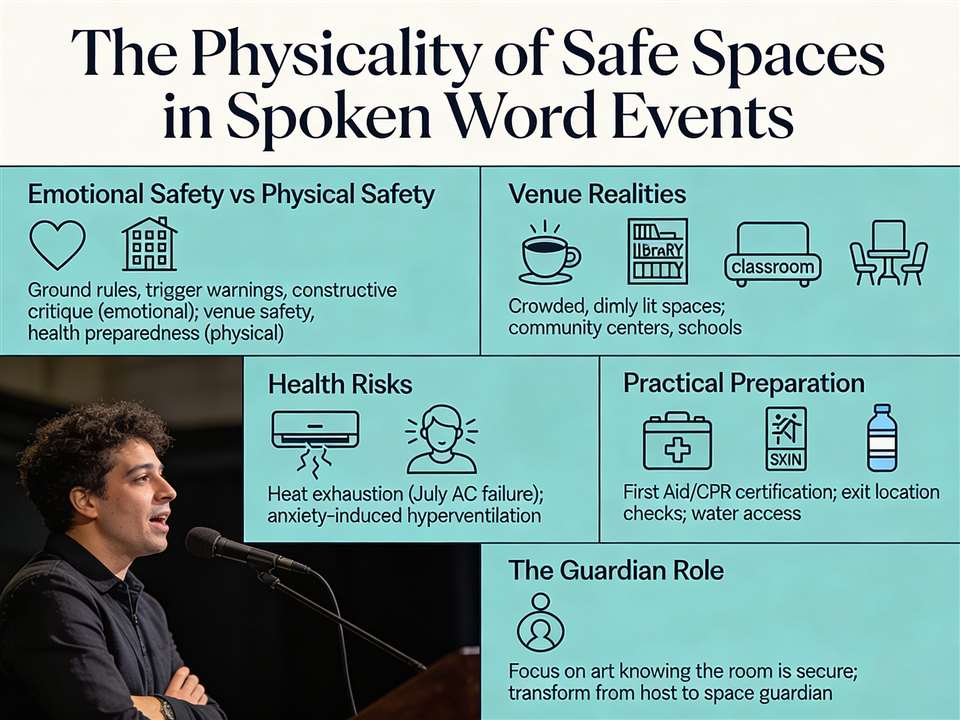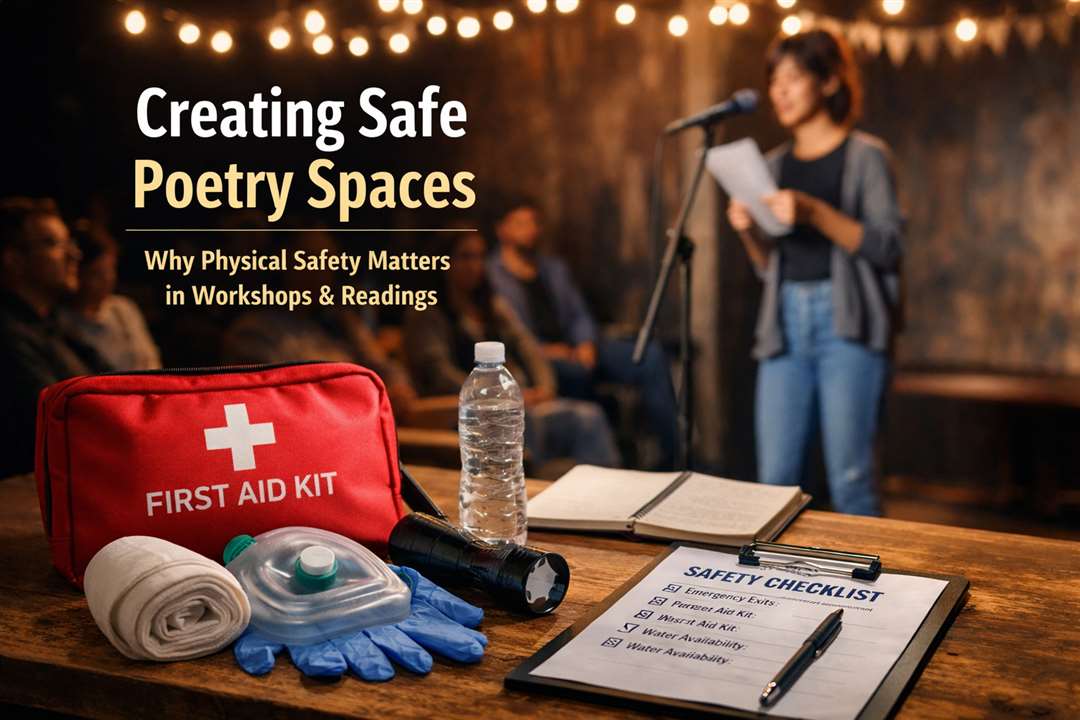
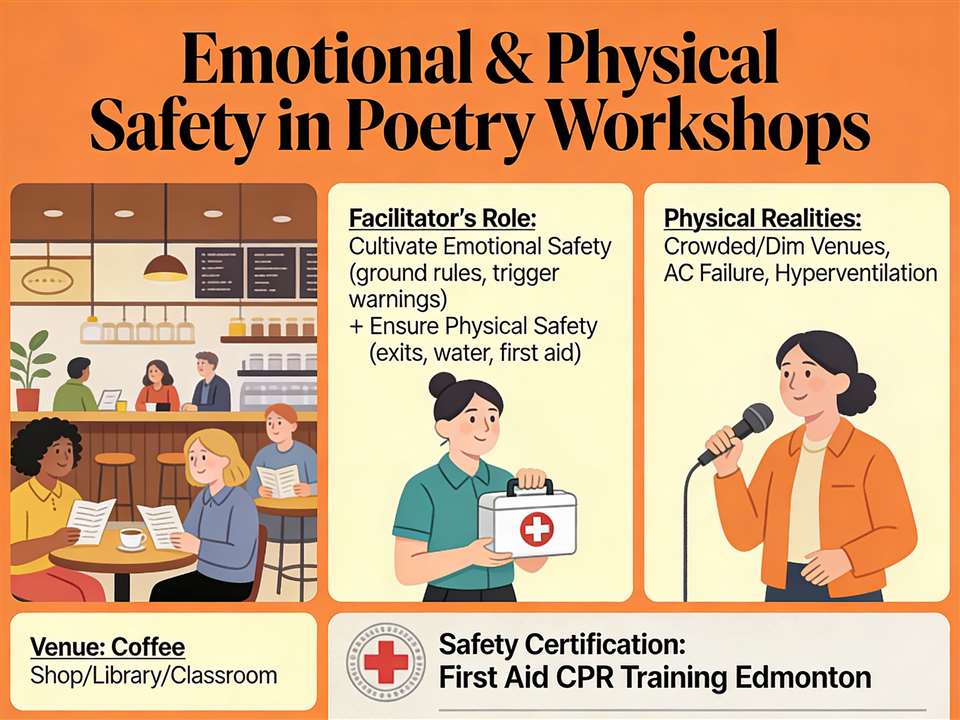
Poetry is, by its nature, a vulnerable act. When we gather in coffee shops, libraries, and classrooms to share our work, we ask participants to strip away their armor and speak their truth. As facilitators, teachers, and organizers, we spend a lot of time cultivating "emotional safety." We establish ground rules, we offer trigger warnings, and we ensure that the critique remains constructive rather than destructive.
But there is another layer to the "safe space" that often gets overlooked by the literary community: the physical safety of the room itself.
The Physicality of the Spoken Word
We tend to think of writing as a solitary, sedentary activity. But spoken word is physical. It is breath, rhythm, and projection. Events are often held in crowded, dimly lit venues. Workshops are frequently run in community centers or schools.
When you are the person holding the microphone—or the person holding the space—you are also the person responsible for the well-being of the audience. I have been to slams where the AC broke in the middle of July, leading to heat exhaustion. I have seen nerves turn into hyperventilation. These aren't metaphors; they are physical realities that interrupt the flow of the art.
The Responsible Facilitator
If you are an educator or a community leader planning to host a series of workshops, your preparation needs to go beyond selecting the writing prompts. You need to be prepared for the unexpected.
This is especially true for those applying for arts grants or working within school boards. Most funding bodies now require organizers to have valid safety certifications. It is a standard of care that legitimizes our industry. For example, a writer running a youth program in Alberta might need to secure specific First Aid CPR Training Edmonton certification to comply with insurance requirements for the venue. While the paperwork feels bureaucratic, the intention is noble: it ensures that if a crisis occurs, the person in charge (you) can handle it.
Metaphors and Realities
There is a poetic symmetry to this. In our writing, we often explore the fragility of life, the rhythm of the heart, and the breath in our lungs. Learning how to protect those things in a literal sense is an extension of that appreciation.
Knowing how to manage a physical crisis gives you a quiet confidence. It allows you to focus entirely on the art, knowing that "the room" is secure. It transforms you from just a host into a true guardian of the space.
Conclusion
The next time you plan a reading or a workshop, take a moment to assess your physical toolkit alongside your creative one. Check the exits. Know where the water is. And ensure you have the skills to protect the people who have trusted you with their words.
Because the most beautiful poem in the world can’t be heard if the room isn’t safe enough to listen.