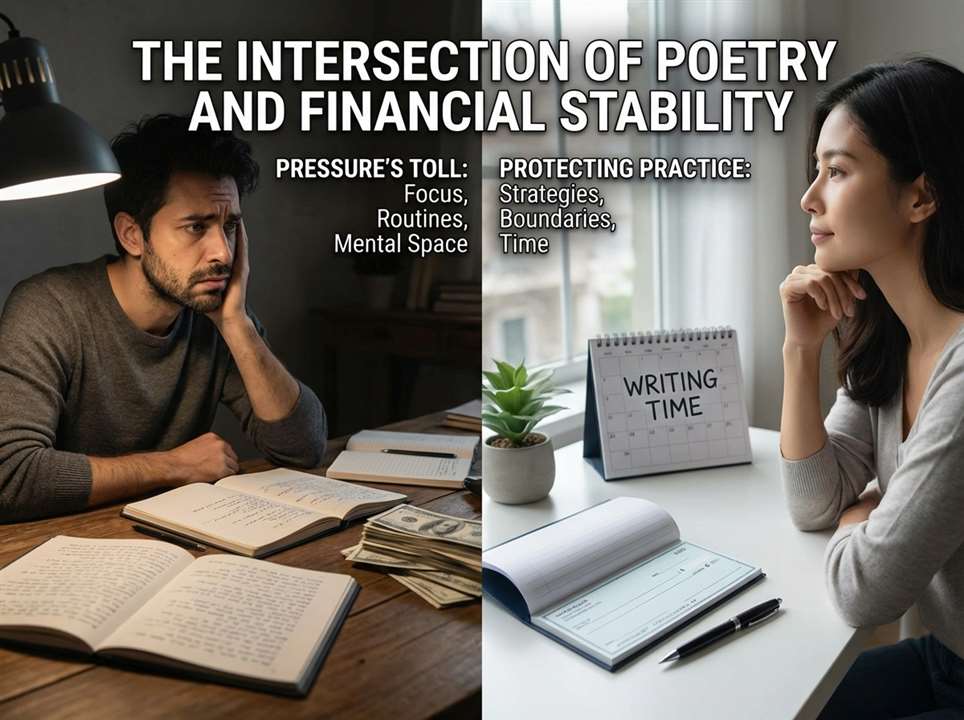
Poetry demands presence. The craft requires sustained attention, emotional availability, and mental space to notice the precise word that transforms a decent line into something memorable. Financial pressure destroys all three.
Rent deadlines don't care about half-finished drafts, and neither do bills. The tension between art and survival isn't new. What changes is finding sustainable ways to protect creative time when unexpected costs arrive without warning.
When the Muse Meets the Mailbox
Financial interruptions fragment concentration in ways that ripple through creative work for days. Some disruptions hit harder than others. Planned expenses can be anticipated and scheduled around. Sudden costs – a broken phone, urgent car repairs, medical co-pays – arrive at the worst possible moments and demand solutions now.
Sarah, a poet from Portland who teaches part-time, experienced this last winter. She'd blocked off a weekend to finish revisions on a manuscript due to her editor Monday morning. Friday afternoon, her laptop screen cracked during her commute home. Repair estimates ranged from $300 to $500, due upfront.
Her checking account couldn't cover it. Credit cards were maxed from previous emergencies. Friends were broke. The manuscript contained months of work, all saved on that damaged machine. Panic replaced any possibility of creative focus.
After hours of researching quick options for covering personal costs when traditional borrowing wasn't available, Sarah found online lenders offering instant approval without extensive credit checks. She secured same-day funding to get her laptop repaired that afternoon. The high interest rate stung, but retrieving her manuscript and meeting her deadline mattered more in that moment. The experience taught her about building emergency savings, though the stress of repayment affected her writing concentration for weeks.
That weekend taught her why poets need strategies beyond hoping emergencies won't happen. Financial disruption is inevitable. The question becomes how to handle it without surrendering creative practice entirely.
Protecting Mental Space Despite Money Stress
Poets develop specific techniques for maintaining focus when financial anxiety intrudes. Some create strict boundaries around their writing hours, treating them as non-negotiable appointments that bills cannot interrupt. Others integrate financial tasks into specific time blocks, preventing them from bleeding into creative periods throughout the day.
Morning writing sessions often work best because bill-paying thoughts haven't accumulated yet. The mind feels clearer before emails arrive or creditors call. Many poets protect this window fiercely, dealing with financial matters only after creative work finishes.
Physical space separation helps too. Writing in libraries, coffee shops, or parks creates distance from the kitchen table where bills pile up. The environment shift signals the brain to enter creative mode rather than survival mode.
Small Systems That Create Big Relief
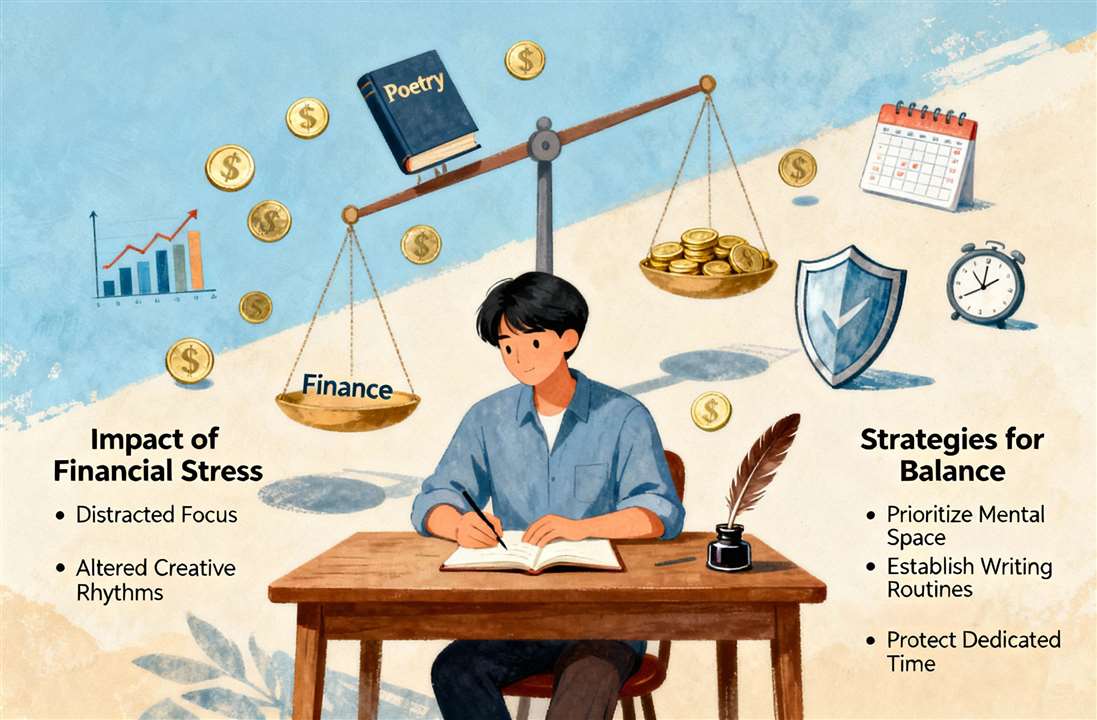
Automating payments removes daily decisions about which bill to prioritize. The mental energy saved from not constantly calculating due dates and account balances returns to craft. Even poets living paycheck-to-paycheck benefit from autopay on minimum amounts, preventing the anxiety spiral of missed deadlines.
Setting specific "money hours" contains financial stress to designated periods. When worried thoughts about rent arise during writing time, poets acknowledge them and postpone processing until the scheduled window. This practice prevents rumination from colonizing every moment.
According to the Academy of American Poets, financial instability remains one of the primary reasons poets abandon their practice. Their research shows that poets who establish even minimal financial routines maintain more consistent creative output than those who handle money reactively.
The Side Hustle Reality
Most poets work multiple income streams – teaching, freelance editing, service jobs, grant writing. This patchwork creates irregular cash flow that complicates budgeting but offers flexibility for creative time.
The key is protecting core writing hours regardless of how many other jobs fill the schedule. Some poets write before work starts. Others claim late nights after shifts end. The specific timing matters less than consistency in carving out dedicated creative space.
Grants and residencies provide temporary financial breathing room, but applications require significant time investment. Treating grant writing as part of the creative practice rather than separate hustle helps maintain momentum on both fronts.
Moving Forward Without Choosing
Poets don't have to choose between their art and financial stability – though it often feels that way during crisis moments. Building small buffers, establishing routines, and accepting help when needed creates space for both survival and creativity.
The words will keep arriving. Bills will too. Finding sustainable ways to handle both protects the practice long enough for the work to matter.