Every poem starts in the imagination. Sometimes it arrives as a clean, bright image. Sometimes it is a half-formed feeling, a memory you cannot quite place, or a voice that shows up before you know what it wants to say. Poets learn to trust that uncertainty. They let suggestion carry part of the meaning and allow the poem to reveal itself line by line.
Even so, imagination can be slippery. An idea can flare up and fade before it ever reaches the page. Rhythm or emotion might push a draft forward, but there are moments when the writing needs something steadier, something that supports the work without flattening it.
Often, that “something” is simply better questions. A thoughtful framework can keep the poem open and lyrical while helping the mind linger on details that deepen imagery, voice, and symbolism.
Structure as a Source of Creative Freedom
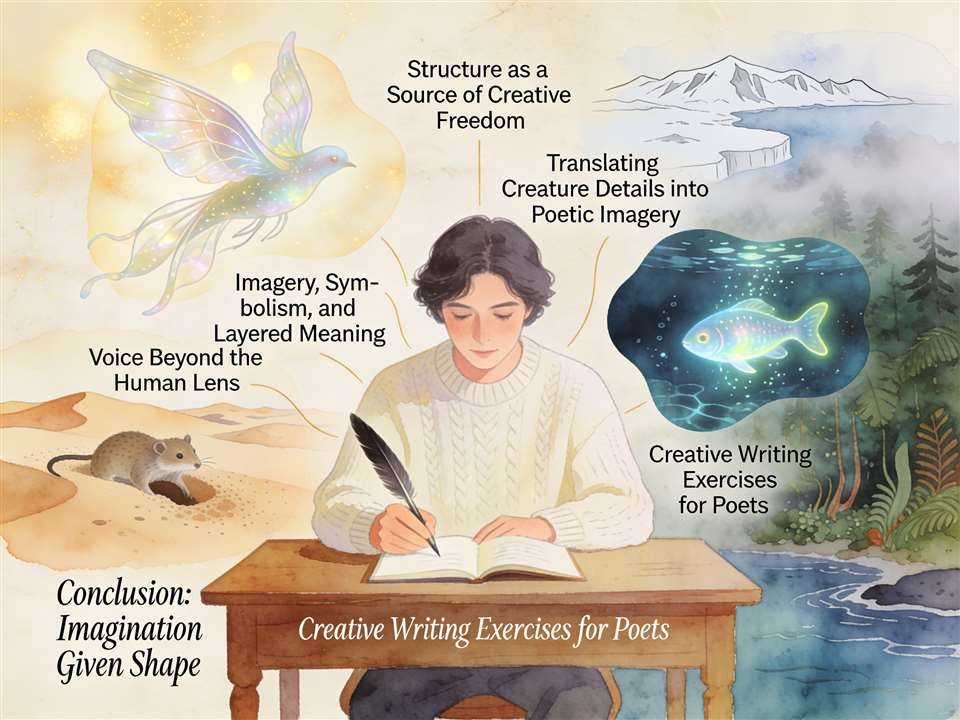
When poets hear “structure,” they often think of form, meter, rhyme, or line breaks. Yet structure can begin much earlier than that. It can begin as a way of paying attention. When imagination is paired with inquiry, images sharpen, and emotion gathers more naturally.
Questions about origin, environment, instinct, and limitation have a quiet force. They bring a sense of lived reality to what might otherwise remain purely atmospheric. Even in poems that never “explain” themselves, those questions show up in the choices you make: what you name, what you imply, what you repeat, what you leave unresolved.
Details you uncover in a species template often return in the draft as metaphor, tone, or atmosphere. A being’s habits can suggest pacing. Its fears can hint at tension. Its surroundings can color the emotional weather of a stanza.
This kind of structure does not box imagination in. It slows the mind just enough to notice what might otherwise stay vague. The poem still has room to breathe, but it carries more texture, as if there is an entire ecosystem behind the few details the reader is given.
Translating Creature Details into Poetic Imagery
Once you imagine a being with specificity, metaphor tends to rise on its own. Physical traits rarely stay literal once they enter a poem. A creature with translucent skin can suggest exposure or fragility. One built for burrowing may convey a sense of retreat, secrecy, or endurance. Even a single feature can become the hinge that turns the poem toward meaning.
Environment matters just as much. A being formed by desert heat moves through language differently than one shaped by deep water or mountain air. Climate influences mood. Sparse terrain can invite restraint and open space on the page, while lush surroundings may encourage layered sensory description. The setting is never only background. It presses on the speaker, shapes the tone, and changes what the poem notices.
Instinct adds another layer. Nocturnal life can carry secrecy and inwardness. Migration can suggest longing or restlessness. Defensive behavior might translate into sharper diction or tighter, more guarded lines. When these patterns are traced with care, the imagery feels grounded rather than decorative.
Coherence grows from that grounding. When physical detail, emotional undercurrent, and environment align, the poem gains quiet authority. Images begin to echo one another. Symbols feel earned. The reader may never see the whole imagined world, but they sense it exists, and that sense deepens the lyric.
Imagery, Symbolism, and Layered Meaning
Imagery is one of the ways poetry becomes physical. Readers feel the texture and atmosphere before naming the theme. A small detail, placed well, can carry more emotional force than a paragraph of explanation.
The Poetry Foundation reflects on the relationship between description and meaning through its discussion of sensory image and description, where concrete language helps feeling take shape in the mind. When a poem gives the senses something to hold on to, abstraction becomes livable. Symbol arrives through experience instead of instruction.
This is where imagined beings and environments can help. The more clearly you understand the conditions of a creature’s life, the more precise your images tend to become. A being adapted to drought might pull the language toward sparer lines and hard-edged silence. One shaped by constant noise may push the rhythm forward, creating urgency in the poem's music.
Layered meaning grows through consistency. Motifs repeat with variation. Atmosphere supports emotional tone. The poem does not need to spell out its symbols for them to work. When the imagery belongs to the same inner world, it holds together, and the reader feels that unity beneath the surface.
Voice and Perspective Beyond the Human Lens
Imagining a being with its own instincts and perceptions can shift a poet’s sense of voice in subtle ways. Perspective changes when the speaker is no longer bound to ordinary human experience. Even when the final poem remains rooted in human emotion, writing through another lens can widen tone and deepen empathy.
Perception is a strong starting point. A creature that senses the world through vibration rather than sight might draw a poem toward sound, pulse, and pattern. One that communicates through color or movement could invite visual intensity, or a form that breaks and reforms on the page. These choices do not need to be announced. They can simply be felt in the texture of the lines.
Distance can also bring clarity. Writing from beyond the familiar self allows themes like grief, resilience, isolation, and longing to surface with a different kind of honesty. The poem becomes less confessional and more distilled. Feeling remains present, but it is carried by image and voice rather than direct declaration.
When voice is rooted in an internally consistent world, the poem often reads as more intentional. The environment influences tone. Instinct informs pacing. The result is a speaker shaped by something real, even if that reality is invented.
Creative Writing Exercises for Poets
Structured imagination becomes most useful when it turns into practice. Working with an imagined being can generate focused exercises that strengthen imagery, voice, and theme without overloading a poem. The goal is not to build an entire mythology. The goal is to give the poem a deeper foundation than it shows.
Exercise 1: Environment as Atmosphere.
Choose a landscape: arctic tundra, dense jungle, abandoned city, tidal shoreline. Imagine a being shaped by that place. Write a short poem where the setting influences diction and rhythm, and let the climate determine the mood. Revisiting core craft principles, such as those outlined in this discussion of essential elements of poetry, can sharpen how image, structure, and theme cooperate on the page.
Exercise 2: Instinct as Metaphor.
Pick one defining instinct: migration, hibernation, camouflage, or territorial defense. Write a poem that embodies this instinct without naming it directly. Let action and sensory detail imply the underlying drive.
Exercise 3: Physical Traits as Symbol.
Select a single physical feature: wings, scales, heightened hearing, or bioluminescence. Build a poem around that trait as a symbol of an emotional condition. Keep the description concrete. Let the reader feel it.
Exercise 4: Perspective Shift.
Write a brief poem from the being’s point of view. Focus on what it notices first: scent, temperature, vibration, pressure, movement. Let that perception shape syntax and music.
Exercise 5: The Unseen World.
Draft a poem that reveals only fragments of the larger world behind it. Suggest habitat, history, or conflict through small details. Aim for implication rather than explanation, and trust the reader to sense the depth.
These exercises keep imagination alive while giving it something to press against. When metaphor grows out of an internally imagined framework, imagery tends to feel more coherent, and even a short lyric can carry the weight of a larger, unseen world.
Conclusion
Imagination remains at the heart of poetry, but it often deepens when it is given shape. Careful attention to environment, instinct, and physical detail can lend coherence to even the briefest lyric. When you consider the unseen dimensions behind an image, the visible lines gain quiet strength.
An imagined being does not need to step fully onto the page. One trait, one setting, one shift in perspective can influence tone and symbolism in subtle ways. The reader may never glimpse the whole world behind the poem, yet they will sense its presence through layered imagery and a consistent voice.
When creative intuition is paired with thoughtful structure, poems can feel both vivid and grounded. The movement from idea to finished piece becomes steadier, guided by detail, atmosphere, and deliberate craft.