Many avid readers can recognise poems written by their favourite poet—even those written by family and friends—without having to resort to external means of identification of authorship. For example, no one will confuse poetry by Shakespeare and Evelyn Vaughn; Sylvia Platt and Robert Frost, etc. Each has a distinctive poetic voice.
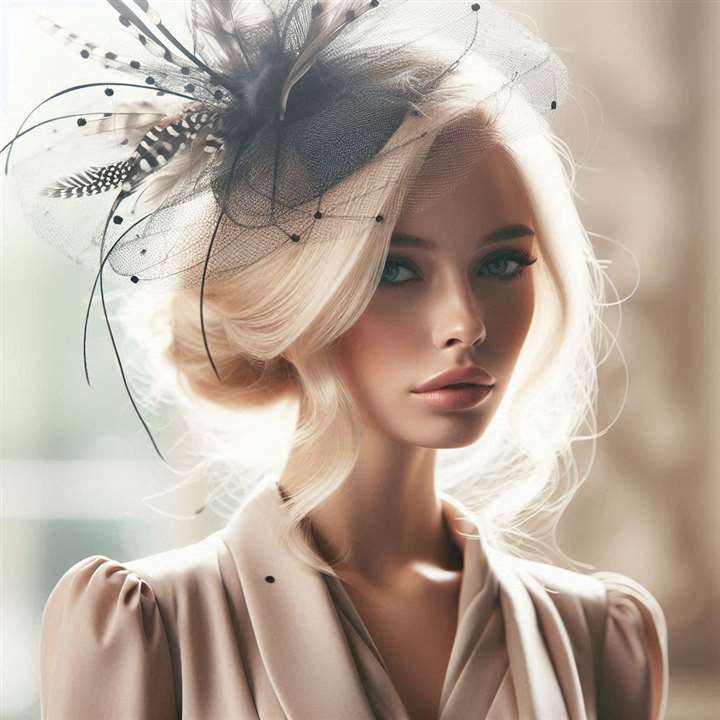
Does AI Have a Poetic Voice?
What is a poetic voice? Poetic voice refers to the distinct tone, style, and perspective through which a poet expresses themselves—it’s the fingerprint of their creative identity. It shapes how imagery, rhythm, and emotion are conveyed and how readers come to recognise their work across different poems.* It is not just about technical improvement; it’s about a recognisable continuity of diction, tone, and imagery across time—that voice tends to stabilise as poets mature.
What about AI—does it also have a poetic voice? The emphatic answer is: ‘Yes.’ It is what sets it apart from the human voice when we review a text. The latest ‘bad habit’ AI has (ChatGPT in particular) is the syntactic pattern: ‘It is not X, it is Y’. It is has the echo of the classic breakup line: ‘It is not you, it is me.’ See the second line from the skit, Reliance on AI Checkers, where I have added it as a tongue-in-the-cheek comment—where the title itself has become a cliché:†
‘It is not your imagination; it is proof the robots haunt our dreams.’
‘Quietly’ is another one of those AI tics that slips into prose like a nervous cough. It’s almost comical how often it appears: ‘quietly revolutionary’, ‘quietly profound’, and ‘quietly haunting’. The word is meant to add subtle drama, but when overused it becomes a kind of stylistic wallpaper—a faint hum that tells you the machine is trying to sound literary. See the tenth line from the skit, Reliance on AI Checkers, where I have added it as a meta-poetic line:†
From the wings, Thomas Gray’s quietly haunting voice
Another example from the satirical skit, Reliance on AI Checkers—AI polishes the golden sheen off a plastic Buddha’s belly, ostensibly brought for good luck, but no one talks in the artificial cadence of iambic metre—never have and never will:
Audience gasps: ‘That’s NOTHing. SHAKEspeare ALso ONCE acCUSED – / preDICTable Iambs, GROSS susPIcious RUSE!’
The short-sentence tic is another of AI’s recent stylistic ‘bad habits’. The following was a meta-literary comment on a social media thread (April 2026):
I also see it use a lot of short sentences.
Really short.
With the next starting on a new line.
And in the end, that's what's really important.
AI’s Poetic Voice
- Semantic Drift: AI sometimes introduces metaphors or descriptions that are tangentially connected or oddly sequenced. The image may seem apt at first glance, but upon closer inspection, the transition or relation between lines is logically or emotionally off-kilter.
- Vocal Register Incongruence: AI models occasionally waver in tone within a single poem—mixing archaic phrasing with modern slang or lyrical abstraction with conversational asides—suggesting a stylistic inconsistency that feels less intentional than in human experimental writing.
- Parenthetical Overuse: When tasked with conveying layered meaning, AI will lean on parentheses or em dashes rather than subtle textual weaving, revealing a mechanical approach to layering nuance.
- Excessive Line Symmetry: There’s sometimes an unnatural balance or rhythmic echo between consecutive lines, especially in poems generated without strict form constraints. It’s the poetic equivalent of overfitting.
- Lack of Negative Space Utilisation: While humans often use silence, fragmentation, or visual layout for emotional resonance or layered pacing, AI tends to keep the poetic field filled. It fears the pause—leaving little air for the reader to interpret.
- Echo Hallmark Effect: Certain lines or phrasings appear across unrelated AI-generated works—similar enough to feel recycled. Phrases like ‘fractured light’, ‘whispers of the void’, or ‘memory folds into dusk’ recur with uncanny frequency.
- Glitch Metaphors: Occasionally, AI inadvertently generates metaphors that seem plausible but are physically nonsensical or emotionally tone-deaf—for example, ‘his silence split like citrus on glass’.
- Uncanny Sensory Synesthesia: When attempting innovation, AI will sometimes force synesthetic devices that feel too algorithmically paired—‘taste of mourning in violet rust’, for instance—pairings that read more like prompts than lived perception.
- Being flat (without feeling): It is no longer a criteria for identifying AI-generated poetry as with the event of new free programmes such as Grok 3, Grok Ai [sic], DeepSeek, etc, emotive poetry can be easily generated.
- Rhyme: AI systems are trained heavily on rhymed verse—song lyrics, nursery rhymes, pop poetry. That’s why they can churn out something that looks like a sonnet but collapses under scrutiny. Knowing the rules—rhyme, metre, volta, thematic progression—is what lets you separate genuine craft from imitation. Conversely, AI may sneak rhyme into places where none is allowed: Suzette Prime, haiku, tanka, and even free verse, where only limited leeway exists.
- Left up to its own devices: Unless specifically prompted to ‘include a pivot’ for instance, AI tends to produce five-line descriptive verse that looks like tanka but lacks the structural turn. It defaults to narrative or decorative imagery, because pivoting requires a deeper grasp of objective-subjective interplay—something AI doesn’t ‘know’ unless instructed.
[Edited 2/8/2026]
- Line lengths: AI habitually defaults to even syllable counts per line in familiar forms such as couplets and quatrains, treating symmetry as a rule rather than a choice. Human poets, however, know it is permissible—even desirable—to deviate. They break lines instinctively, guided by cadence, emphasis, or meaning rather than mechanical balance. This is why AI often misfires with Suzette Prime, producing incremental syllable counts (2, 3, 5, 7, etc.) as if following a sequence, instead of using prime numbers in no fixed order. The human ear and instinct allow irregularity to breathe, whereas AI clings to pattern for safety.
[Edited: 13/9/2026]
An AI-generated parody, wearing a villanelle like a rented tux:
An AI Walks into a Poetry Contest (poetrysoup.com)
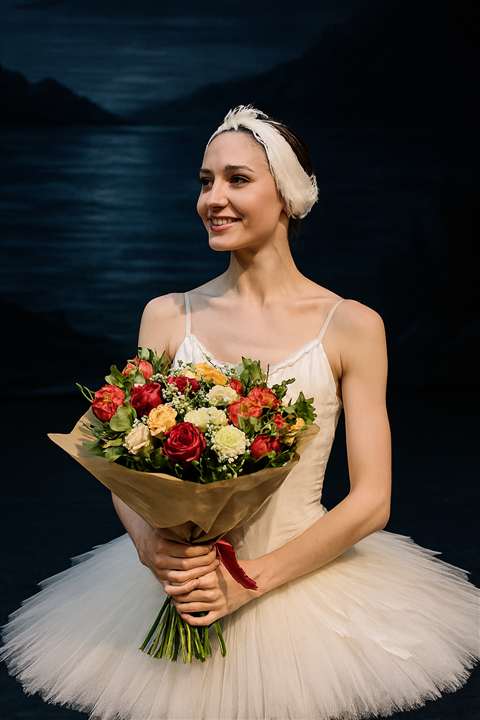
Picture AI generated—check the hands!
Overreliance on AI checkers to flag possible machine-generated text should be discouraged—there are simpler and more effective approaches. A practical method is to use large language models like ChatGPT to generate a sample piece from a straightforward prompt, for example: Write a sonnet extolling the virtues of being single from either a man’s or a woman’s perspective. Left unguided, AI often defaults to the Shakespearean sonnet form. Running the same exercise across multiple models provides a clearer sense of how each handles general prompts. Compare these outputs with established sonnets—or with your own writing—and you’ll quickly develop a trained eye for AI-generated work.
Error camouflage
Some writers deliberately sprinkle in grammar mistakes or spelling errors to trick AI-detection tools into thinking their work is ‘human’. Or they might resort to typos, odd syntax, inconsistent punctuation, irregular capitalisation, and/or incorrect rhyme. It’s a kind of camouflage, but ironically it often undermines the craft itself. Or a poem is just so unskilled that AI on its worse day will not own it: failed poetry.
ERROR CAMOUFLAGE
There were once a poet of note
Considered by some as the GOAT.
Its a breathe of fresh air;
when poetry’s without compair.
As not many lie off AI to boot.!
Identifying AI Fingerprints in Contest Submissions
A practical companion for assessing authenticity, coherence, and poetic integrity.
1. Clarity, Structure & Lineation
- Linear meaning: AI-generated poems often explain rather than evoke. There is little space left for interpretation, and metaphors arrive fully decoded.
- Syntax & phrasing: Expect short, declarative sentences—eg, ‘Poetry that bleeds on the page’. AI avoids linguistic risk to maintain clarity.
- Abrupt or didactic endings: Closures tend to ‘wrap up’ with overly resolved conclusions or moral tones.
- Forced enjambment: Lacks intuition in line breaks—results feel mechanical or clipped. Rarely mimics fluid or emotionally resonant enjambment.
2. Metre, Form & Formal Constraint
- Clinically correct metre: Often defaults to 8-syllable iambs in free verse. Cannot convincingly execute syllabic verse such as Suzette Prime, or sonnet variants like the Suznet.
- Metre in sonnets, for example: AI tends to play it safe, relying on short one- and two-syllable words to simplify scansion. It seldom ventures into longer or more complex words, since these introduce metrical challenges. A poet, by contrast, will deliberately mix word types: monosyllables with strong stress, polysyllables carrying both primary and secondary stresses, and longer constructions that create intentional discordance. This planned disruption enriches the rhythm—as in “through ignorance – eventually hound” (ig-no-rance & e-ven-tu-al-ly)—where the layered stresses resist mechanical regularity and sharpen the expressive effect. [Edited: 13/9/2026]
- Overreliance on known forms: Sonnets (especially Shakespearian) are its stronghold. Variants requiring tonal shifts or structural elasticity reveal AI’s limitations.
- Inconsistent line counts: Tends to produce one line short when a title is miscounted as a line. Or it might incorrectly add ‘The End’ to micro-fiction, a skit, etc, calculating it as a line.
- Repetition: Overused and formulaic, especially in villanelles, pantoums, or limericks. Predictable rhythmic patterns suggest automated generation.
3. Rhyme & Sound Devices
- Simplistic rhymes: Common rhymes paired with forced, less-idiomatic matches (eg, ‘composer/transposer’).
- Default to rhyme: Even in free verse, rhyme often appears unprompted.
- Alliteration overload: Frequently forced, lacks organic integration with tone or theme.
- Internal rhyme clichés: Used for musicality but disconnected from emotional depth.
4. Imagery, Metaphor & Voice
- Mixed imagery: AI lacks focus—multiple image threads may dilute emotional clarity.
- Clichéd metaphor: Highly recurrent or romanticised tropes; eg, ‘reflected in your tearful soul’.
- Overused AI metaphors: Watch for recurring phrases like ‘fractured light’, ‘echoes in the void’, or ‘memory folds into dusk’.
- Echo Hallmark effect: Some lines appear across unrelated poems—an uncanny AI giveaway.
- Synesthetic misfires: Contrived pairings like ‘taste of mourning in violet rust’ signal algorithmic mashups, not lived experience.
- Glitch metaphor: Plausible-sounding metaphors that unravel under scrutiny (eg, ‘his silence split like citrus on glass’).
5. Stylistic Consistency & Layout
- Tone drift: Sudden shifts between archaic diction and modern idioms; suggests style mismatch rather than intentional juxtaposition.
- Excessive symmetry: Line structures show unnatural balance or mirroring—predictability over expressive range.
- Title case default: AI often capitalises each word in the title unless explicitly instructed otherwise.
- Unusual bold text: In copy-pasted contest entries, some words appear mysteriously bold—likely stemming from system-based AI formatting artefacts. At times, whole words are inexplicably capitalised in the content of the poem.
- Visual misuse: Most AI systems can’t natively ‘scan’ or interpret picture prompts in contests or blogs unless the image is accompanied by text. It excels in vague thematic prompts like ‘Write a 10-line poem about “lekker”.’ A reverse image search might result in a distortion of the intention of the contest prompt.
- Misalignment with visual prompts: AI cannot interpret images; if the submission seems disconnected from a clear visual or photograph, be wary.
6. Poetic Intent & Emotional Resonance
- Lack of negative space: AI fills the canvas—little silence, fragmentation, or ambiguity. Avoids what it can’t measure.
- Unanchored imagery: Broadly romantic and emotionally evocative, but lacking in personal nuance or cultural specificity.
- No ‘poetic fingerprints’: Newer poets using AI often echo the sponsor’s example poem. A severe deviation from the poet’s earlier voice is a red flag. Some (old or new poets) even ‘rework’ the sponsor’s example poem(s) by putting it through an AI blender—a new form of plagiarism!
- Flattened emotional complexity: With advanced models like Grok 3 & 4 and DeepSeek, AI can now mimic emotive tones, but authentic poems often reveal struggle, contradiction, or hesitation—what AI still renders too smoothly.
7. Technical Quirks & Formatting Clues
- Em dash overuse: Consistently chosen over en dashes, ellipses, or standard punctuation—though some human poets use it stylistically. And the newer trend by AI to use spaces before and after an em dash, which is grammatically incorrect.
- Excessive parentheses: A mechanical attempt to layer meaning instead of weaving nuance through tone and metaphor.
- Syllable inaccuracy: Syllables are miscounted across lines. Crucial in syllabic forms such as Suzette Prime, where it has a tendency to include 9-syllable line(s)—9 is NOT a prime number.
- Rare or obscure vocabulary: Words like, marrowed, unsee, etc. may signal stylistic inflation—less to impress, more to obfuscate.
- Scaffolding: Many AI-generated contest entries tend to over-label, over-explain, or add headings like ‘Stanza I / II’ or ‘Part 1 / Part 2’. That’s a telltale sign of machine assistance. A human poet usually just lets the stanzas stand on their own without scaffolding.
- Numbering lines: Numbering is a mechanical compliance marker—it highlights at a glance the adherence to a prompt, eg ‘Write a 10-line skit …’
- Parenthesis and Italics Overlap: AI often uses both, especially when citing examples—this is stylistically incorrect (either use one or the other, not both). Or even using quotation marks with italics—it’s like wearing both a belt and braces, eg, “American English is its default setting.”
- Automatic stanza breaks: AI often inserts a new stanza after every full stop, creating neat but unnatural segmentation.
- Symmetry bias: Balanced stanzas of equal length, even when the prompt allows irregularity.
8. Drifting in Language Preference
- Vocabulary: When a non-American writer suddenly drops in words like sidewalk, eyeglasses, or apartment complex, it often signals that the text has been polished or influenced by American English idiom rather than the writer’s native register.
- Mix ‘n Match Languages: The subtle differences between British English and American English — ‘on the weekend’ versus ‘at the weekend’, ‘in hospital’ versus ‘in the hospital’, etc. Using different expressions in the same text.
- American vs British English Phrases: For example: The phrase ‘a new lease on life’ is primarily used in American English, while ‘a new lease of life’ is the version commonly used in British English.
- AI’s tendency toward ‘refinement’: The satirist can exploit these above mentioned oddities, but AI tends to flatten these distinctions because it’s trained on mixed corpora, so its ‘polish’ often produces a hybrid that feels slightly uncanny.
- Lost in Translation: It screams ‘machine’ as colloquialism is missing from the text—the voice of the people is ‘lost in translation’ and often over explained in AI-generated text, or AI does not 'get it'.
- Unlived in Experience: The ‘refined for clarity and cadence’ suggestion by AI is a symptom of its training—smoothing edges until the verse feels like it’s been sanded down by centuries of literary convention.
- Inconsistent Styles: It can recombine styles in dazzling ways, but the result often feels like second-hand creativity, a collage of influences rather than a singular vision.
- Pairing lines: It betrays a mechanical instinct to structure rather than to let the verse flow organically. For example:
foam gathers
in the hollow of my palm
a lantern flickers
then folds into the wind
shadows
spill across the water’s skin
the tide
remembers what I forget
salt burns
but the silence does not end
Final Notes
AI-generated poems are increasingly emotive, well-structured, and stylistically convincing—but their tell lies in constraint response, image economy, rhythmic instinct, and intuitive disruption. It can produce convincing free verse and open form, but forms like the Suzette Swan Arc‡ that reward emotional oscillation and formal looseness remain ideal litmus tests.
This guide invites discernment, not distrust; evolution, not elitism.
Common AI Punctuation Fingerprints at a Glance
They’re not ‘errors’ per se—many are technically acceptable. It only matters to the reader when it is important to discern AI influence in texts.
- Forward slash spacing: innate / income / initial instead of innate/income/initial.
- Em dash spacing: AI often writes word — word with spaces, whereas many human stylists prefer word—word (no spaces) or vary deliberately.
- Ellipsis length: AI defaults to three dots ... consistently, while human writers sometimes use two, four, or the typographic ellipsis (…) depending on style.
- Parentheses habits: AI tends to pair parentheses with italics or quotation marks redundantly (“(example)”), whereas humans usually choose one framing device.
- Quotation marks: AI often sticks rigidly to straight double quotes " " even in British English contexts where single quotes ' ' are conventional.
- Slash vs “per”: AI overuses slashes for ratios (words/minute) instead of writing words per minute.
- Comma placement: AI frequently inserts a comma before too (I like it, too.) or after short introductory words (But, it was late.), following prescriptive rules rather than natural rhythm. AI does not always keep up with the current trends: Traditionally, you can use a comma after ‘So’ when it begins a sentence, but modern style guides often omit it unless you want to emphasise a pause, eg ‘So, by stepping lightly and swift drop’.
- Hyphen vs en-dash: AI often collapses distinctions, using a simple hyphen for ranges (10-12 years) instead of an en-dash (10–12 years).
List supplied by MS Copilot – 19/4/2026
USEFUL LINK
The most comprehensive and accessible guide to modern British punctuation rules is the University of Sussex’s Guide to Punctuation by Larry Trask. It covers everything from commas and semicolons to quotation marks, abbreviations, and stylistic differences between British and American usage.
Guide to Punctuation (sussex.ac.uk)
Conclusion
Inconsistent poets often sound like different writers from one contest to the next, and that’s precisely the kind of instability that AI also struggles with. AI is trained on vast corpora, which means it absorbs multiple registers, styles, and tonal habits. When prompted, it may lean toward whichever interpretation is most statistically dominant. Maintaining a consistent poetic fingerprint across hundreds of pieces is hard for AI, because it doesn’t have a lived worldview anchoring its diction.
Identifying the possible use of AI (in poetry and elsewhere) is no less important than learning how to discern fake news—a life skill worth cultivating. An ‘AI tell’ is as obvious as a fingerprint—once you see it, you can't unsee it. Using AI checkers is as reliable as the folkloric dangling of a wedding ring on a string to divine the gender of an unborn child, but with less than 50% accuracy. It is not about outsmarting AI, it is quietly recognising patterns.
Using AI for grammar, spelling and punctuation is no different from using Microsoft Word’s grammar and spell check, Grammarly.com, an online dictionary, or a printed reference. It will not show up in AI detectors as ‘AI-generated’. However, if you use AI-powered rewriting or paraphrasing features, those can trigger AI detectors, and false positives sometimes occur. Claims that these tools flag the Bible or Shakespeare are conspiracy theories—the reason they appear is simply because those texts are part of the dataset. It’s like standing at the shore and declaring the ocean is wet.
By allowing AI to ‘refine and polish’ your text, you lose the edge. That said, some argue this ambiguity is its own aesthetic: a new genre of ‘machine lyricism’ where the tension between polish and artificiality becomes part of the art. Just as modernist poets embraced fragmentation and dissonance, perhaps AI poetry’s ‘second-hand bubblegum’ quality could be read as commentary on our age of remix and replication.
Each poet develops their own distinctive poetic voice.
Each discerning reader has their list of favourite authors and poets.
You either love it or hate it.
Each to his own.
Images generated by DALL-E 3
*Poetic Voice & Poet’s Reasonable Growth Arc | PoetrySoup.com
†Reliance on AI Checkers | Poem (poetrysoup.com)
‡Common Poetic Devices Favoured by Suzette Swan Arc Poetry | PoetrySoup.com