Poems often hold more than words. They can carry family history, grief, love, travel, childhood, milestones, recovery, faith, friendship, and the small details that might otherwise fade.
Preserving poems properly helps keep those moments accessible. A poem saved in a notebook, file folder, phone app, or loose page can be meaningful, but it can also be lost, damaged, or forgotten.
The best preservation method depends on the purpose. Some poems are meant to be read privately. Others belong in family archives, gifts, memorials, performances, or printed collections.
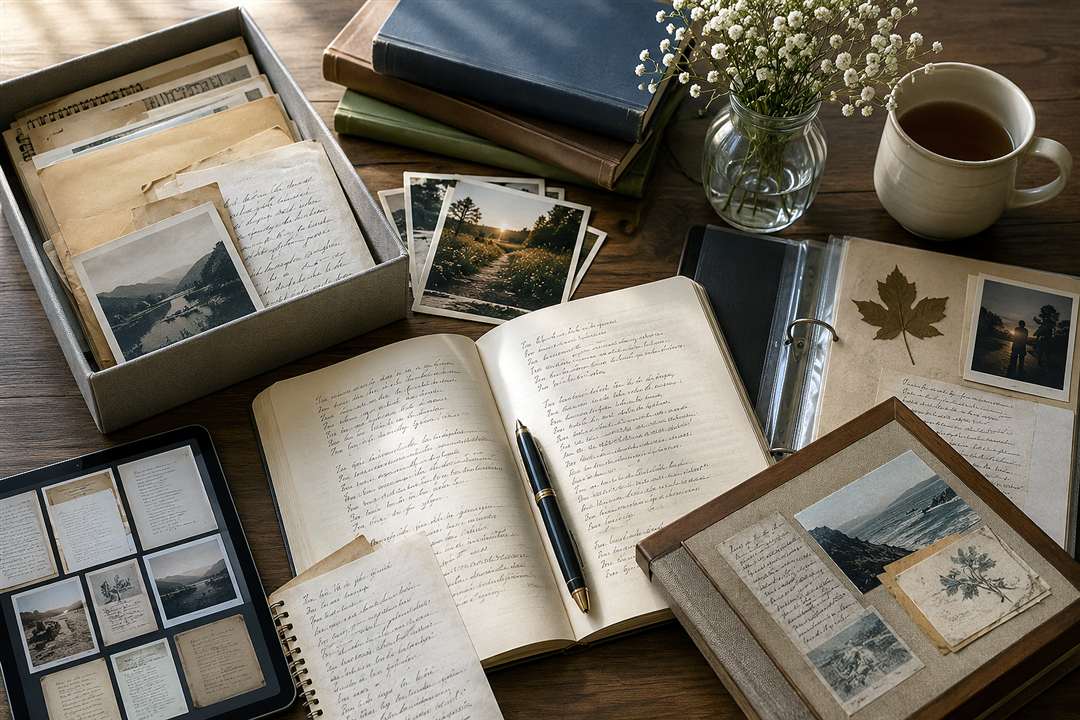
Start by Organizing the Original Material
Before creating anything new, gather the original poems in one place. Include handwritten drafts, typed pages, journals, voice notes, emails, photos, scanned documents, and digital files.
Keep the original order if it matters. Some poems belong to a certain period, place, person, or event.
Create a simple inventory. List the title, date, author, location, occasion, and any notes about why the poem was written.
This turns scattered writing into a usable archive.
Digitize Handwritten Poems
Handwritten poems have emotional value, but they are vulnerable to fading, water damage, tearing, and misplacement. Scanning or photographing them creates a backup.
Use a flat surface, even lighting, and high resolution. Avoid shadows, glare, and tilted angles.
Save files in organized folders by year, author, theme, or event.
For fragile paper, place the poem in a clear protective sleeve before handling. Do not press hard on old pages.
A digital copy protects the words while preserving the look of the handwriting.
Create a Printed Memory Collection
Printed collections are useful when poems are connected to family, travel, birthdays, weddings, memorials, or personal milestones.
A collection can include poems, photographs, captions, handwritten notes, dates, and short reflections.
For families, writers, and memory keepers, photo books can help combine poems with images, timelines, and personal details in a format that is easier to share than loose pages.
The strongest collections are edited. They do not need every draft. Choose the pieces that tell the clearest story.
Pair Poems With Context
A poem becomes more meaningful when readers understand the moment around it. Context does not need to be long.
Add a short note beside each poem explaining who wrote it, when it was written, where it was written, and what was happening at the time.
This is especially important for family poems. Future readers may not know the names, places, or references inside the writing.
Context Details to Include
Useful notes may include:
- Date written
- Author name
- Location
- Occasion
- Person it was written for
- Family relationship
- Original notebook or source
- Related photograph
- Short memory about the poem
Context keeps the poem from becoming disconnected from its story.
Preserve the Original Pages Safely
Digital copies are useful, but originals still matter. Store handwritten poems in archival-quality sleeves, folders, or boxes.
Avoid damp spaces, garages, attics, and direct sunlight.
Use acid-free materials when possible. Keep pages flat and avoid folding them repeatedly.
If poems are written in pencil, fading can occur over time. Make a digital copy and avoid excessive handling.
For very old or damaged pages, consider consulting an archivist or paper conservation specialist.
Build a Themed Poetry Binder
A binder works well for an active collection. It allows poems to be added, rearranged, and grouped over time.
Use dividers for themes such as family, love, grief, nature, childhood, faith, holidays, travel, or personal growth.
Print clean copies and place originals separately if they are fragile.
Binder Sections to Consider
Helpful sections include:
- Family poems
- Wedding poems
- Memorial poems
- Holiday poems
- Travel poems
- Childhood memories
- Personal reflections
- Drafts and revisions
- Published pieces
A binder is practical for writers who continue adding new work.
Turn Poems Into Display Pieces
Some poems deserve to be seen every day. A short poem, line, or stanza can be framed for a bedroom, hallway, office, nursery, or reading corner.
Choose simple typography and enough white space around the words.
If the handwriting is beautiful or meaningful, frame a high-quality scan of the original page.
Avoid crowding the design with too many images or decorative elements.
The words should remain the focus.
Create a Digital Archive
A digital archive helps protect poems and make them searchable. Use clear file names and folder structures.
For example: “1998_Memorial_Poem_For_Grandma.pdf” is more useful than “scan_004.pdf.”
Back up the archive in more than one place. Use an external drive and a secure cloud folder.
Add a simple spreadsheet or document that lists the collection contents.
Review the archive once a year to make sure files still open and backups are current.
Final Thoughts
Preserving poems and memories starts with organization. Gather the originals, digitize fragile pages, add context, and choose the right format for sharing or storage.
A poem can live in a binder, framed print, audio recording, digital archive, or printed collection.
The best method is the one that protects both the words and the story behind them.
When poems are preserved with care, they become more than personal writing. They become records of people, places, voices, and moments worth keeping.