In an age of constant notifications, rising anxiety, and emotional overload, people are quietly turning back to something ancient: poetry. Not just reading it—but writing it. The question is no longer whether poetry is artistic. It’s whether it’s therapeutic.
Surprisingly, modern psychology suggests the answer is yes—with some nuance.

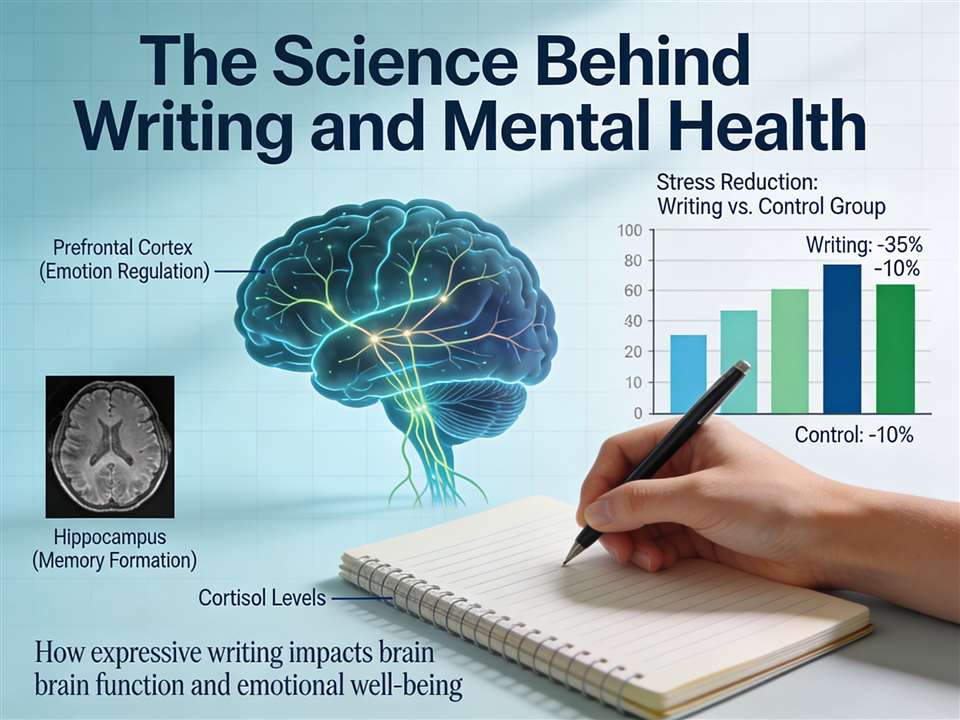
The Science Behind Writing and Mental Health
At the center of this conversation is a concept known as expressive writing, pioneered by James W. Pennebaker. His research—and hundreds of follow-up studies—has shown that writing about emotions can produce measurable psychological and even physical benefits.
A large body of research, including studies indexed by the National Library of Medicine, has found that:
- Expressive writing has been tested in 400+ studies across populations (PMC)
- It produces statistically significant improvements in mental and physical health (though effects are modest) (PMC)
- It can reduce depression, anxiety, and PTSD symptoms in certain groups (PMC)
- Some studies show reduced medical visits and improved immune function (ResearchGate)
Even more striking: regular journaling and expressive writing have been shown to reduce anxiety and depression symptoms by 20–45% in some studies (Reflection).
This isn’t just “feel-good advice.” It’s evidence-based.
Why Poetry Is Especially Powerful
So where does poetry fit into this?
Poetry is essentially compressed emotional expression—a distilled form of journaling. Unlike standard prose, poetry allows:
- Metaphor instead of literal explanation
- Rhythm and structure that mirror emotional states
- Freedom from grammar rules, enabling raw honesty
In psychological terms, poetry enhances emotional labeling, a process shown to calm the brain’s fear center (the amygdala) and activate rational processing regions (The Washington Post).
In other words:
Writing poetry doesn’t just express emotion—it helps regulate it.
Stress Relief Through Structured Expression
One of the most immediate benefits of writing poetry is stress reduction.
Research shows that writing about stressful or traumatic experiences:
When thoughts stay internal, they often spiral. Writing—especially poetic writing—externalizes them.
This creates psychological distance:
- The problem becomes something you observe, not just feel
- You move from reaction → reflection
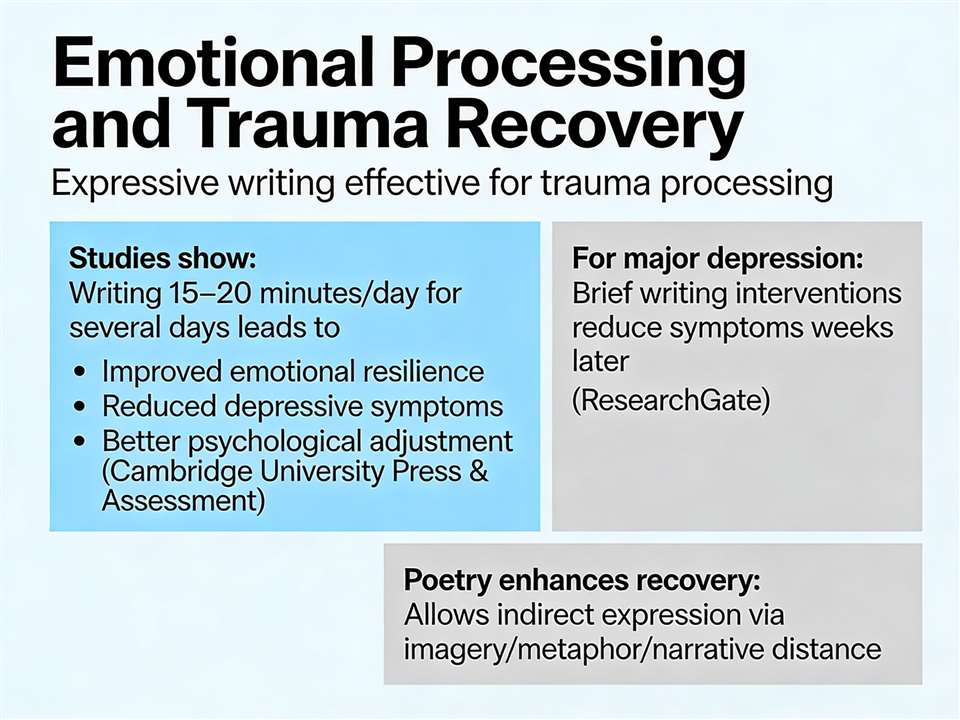
Emotional Processing and Trauma Recovery

Expressive writing has been particularly effective in helping individuals process trauma.
Studies show that writing about deeply emotional experiences for just 15–20 minutes over several days can lead to:
For individuals diagnosed with major depression, even brief writing interventions have shown measurable symptom reduction lasting weeks (ResearchGate).
Poetry enhances this process because it allows indirect expression—
you don’t have to confront trauma head-on. You can approach it through imagery, metaphor, or narrative distance.
The Physical Health Connection
This is where things get even more interesting.
Expressive writing doesn’t just affect the mind—it impacts the body:
- Improved immune system markers
- Lower blood pressure
- Fewer stress-related doctor visits
The theory is simple:
Suppressing emotions creates physiological stress. Releasing them reduces it.
Poetry becomes a low-cost, accessible way to do exactly that.
Journaling vs. Poetry: What’s the Difference?
Both are beneficial—but they serve slightly different roles.
|
Journaling
|
Poetry
|
|
Linear, narrative
|
Nonlinear, symbolic
|
|
Good for daily reflection
|
Better for deep emotional expression
|
|
Structured thoughts
|
Raw or abstract emotions
|
|
Analytical
|
Intuitive
|
Many therapists actually recommend combining both:
- Journal to understand
- Write poetry to feel
The Role of Community: Why Sharing Matters
Writing privately is powerful—but sharing can amplify the benefits.
Platforms like PoetrySoup provide a space where users can:
- Publish expressive writing anonymously or publicly
- Receive feedback and validation
- Connect with others processing similar emotions
This social element matters. Research shows that social support and emotional disclosure together can significantly enhance psychological well-being (PMC).
In simple terms:
Being heard—even by strangers—helps healing.
Important Caveats (What the Research Also Says)
It’s not all universal.
Some findings suggest:
- Effects are modest overall and vary widely (PMC)
- Expressive writing may be less effective (or even uncomfortable) for people who don’t typically express emotions (PMC)
- It works best as a complement, not a replacement, for professional mental health care (Reflection)
So while poetry can help, it’s not a cure-all.
How to Start Using Poetry for Mental Health

You don’t need to be a “poet.” You just need to start.
Try this simple method (based on expressive writing research):
- Write for 10–20 minutes
- Focus on something emotionally significant
- Don’t worry about structure or quality
- Use imagery or metaphor if direct expression feels hard
- Repeat for 3–4 days
Optional: Share it on a platform like PoetrySoup if you want feedback or connection.
Final Verdict: Does Poetry Improve Mental Health?
Yes—but not magically.
Poetry works because it taps into something deeply human:
- The need to express
- The need to process
- The need to be understood
Backed by decades of research, expressive writing—including poetry—can:
- Reduce stress
- Improve mood
- Help process trauma
- Even benefit physical health
And perhaps most importantly…
It gives shape to emotions that would otherwise remain overwhelming and undefined.
In a world that moves fast and feels noisy, poetry offers something rare:
a quiet place to think, feel, and heal