Winter is a season rich with symbolism—quiet, stark, reflective—and poets throughout history have turned to its cold landscapes to explore some of their deepest themes. These poems focus on winter itself: its beauty, its stillness, its emotional power. None of them reference Christmas, allowing teachers, students, and readers to experience winter in its purest poetic form.
Below are ten essential winter poems, each accompanied by a detailed description, followed by an educational breakdown showing how these works can be taught from grades 5 through 12.

Famous Non-Christmas Winter Poems
Frost captures a quiet pause in a snowy forest, transforming a simple moment into a meditation on peace, duty, and longing. The stillness of the winter woods invites rest, yet the speaker feels the pull of responsibilities waiting beyond the silence.
This brief, image-rich poem turns bare winter trees into natural sculptures. Williams highlights the season’s simplicity, showing that even the most minimal landscape possesses elegance and artistry.
Stevens encourages readers to view winter without judgment or emotion—to see “the nothing that is not there.” The poem blends icy imagery with philosophical reflection on perception and the mind.

Strand uses winter as a metaphor for hard times, offering a message of resilience and clarity. The poem urges the reader to remain honest, centered, and open—even when the world feels cold and uncertain.
In only a few lines, Frost shows how a tiny natural event—the light fall of snow from a crow’s movement—can transform a sour mood. The poem celebrates nature’s power to shift perspective.
From As You Like It, this lyrical speech compares winter’s harsh winds to human ingratitude. Shakespeare’s tone is playful yet biting, suggesting that cold weather is kinder than unkind people.
Atwood portrays winter at its most weary—gray skies, animal instincts, the struggle to create. With sharp humor and honesty, she explores late-winter frustration, survival, and renewal.
Hardy paints a bleak, dying winter landscape suddenly interrupted by the hopeful song of a thrush. The contrast creates a powerful emotional shift, blending despair with a fragile spark of joy.
Before it became a hymn, Rossetti’s poem was a meditation on winter’s emptiness and human tenderness. Its images—frozen water, iron winds—create a sense of emotional purity and quiet devotion.
This sweeping poem turns the winter night sky into a vast cosmic drama. Meredith blends science, movement, and emotion, showing winter not as lifeless but as filled with celestial energy.
How to Teach These Winter Poems: Grade 5–12 Breakdown
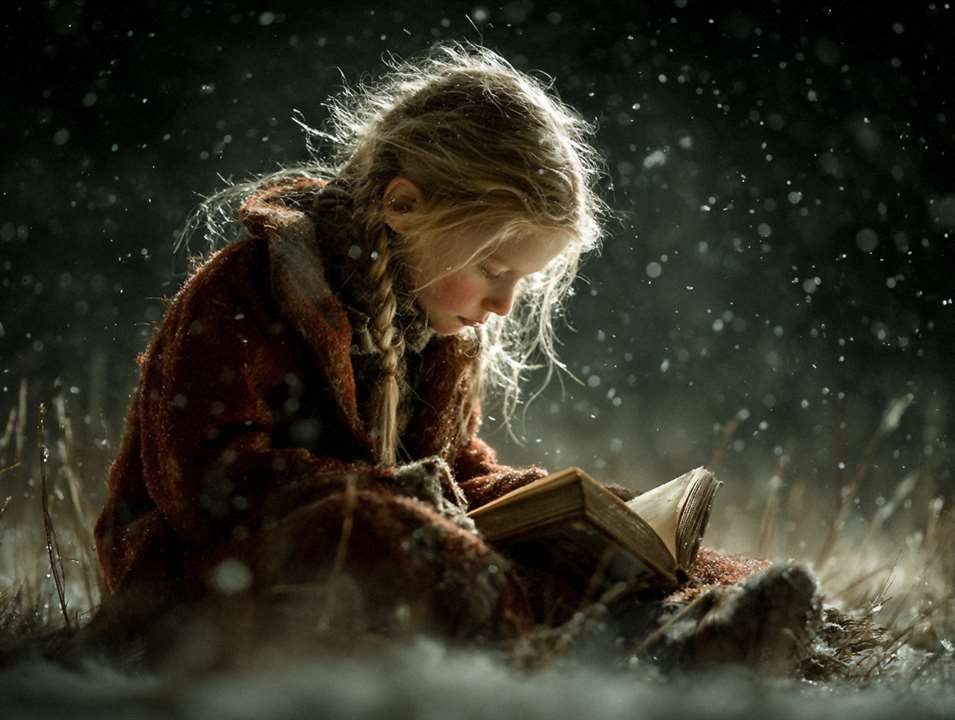
Each of these poems opens unique learning opportunities across grade levels. Below is a progressive teaching framework that grows in depth and complexity as students mature.
Grade 5 — Imagery and Feelings
At this level, poems help students notice simple sensory details and emotional responses.
Students can:
- Identify sights, sounds, and feelings of winter
- Describe how a poem makes them feel
- Point to basic nature imagery (snow, wind, trees)
Best poems: Frost, Rossetti, Williams
Grade 6 — Mood and Simple Themes
Students begin interpreting mood and recognizing foundational themes.
Skills include:
- Identifying mood (peaceful, lonely, hopeful)
- Understanding simple themes (change, responsibility, nature)
- Exploring perspective and point of view
Ideal poems: Frost (both), Stevens, Hardy
Grade 7 — Figurative Language & Symbolism
Students learn how poets use winter to represent deeper ideas.
Students can:
- Identify metaphors and symbols
- Compare literal winter to symbolic “emotional winter”
- Notice shifts in tone
Strong examples: Frost, Strand, Hardy, Shakespeare
Grade 8 — Structure, Style, and Word Choice
Here, students examine how form creates meaning.
They can:
- Analyze how line length controls pace
- Discuss diction—simple vs. complex words
- Contrast minimalist poets with descriptive ones
Best for this stage: Williams, Stevens, Atwood
Grade 9 — Complex Themes & Interpretation
High school freshmen begin deeper literary thinking.
Focus areas:
- Conflicting emotions (peace vs. duty, despair vs. hope)
- Ambiguity in meaning
- Comparing different winter landscapes
Strong poems: Stevens, Strand, Hardy
Grade 10 — Poetic Devices & Literary Lenses
Sophomores can engage with poems on analytical and conceptual levels.
They can:
- Identify symbolism, metaphor, personification, and irony
- Apply literary lenses (psychological, ecological, existential)
- Discuss how nature reflects human identity
Useful poems: Strand, Shakespeare, Atwood, Frost
Grade 11 — Philosophy, Context & Style
Juniors explore deeper intellectual territory and context.
Skills include:
- Analyzing philosophical ideas (perception, fate, renewal)
- Understanding author background and literary movement
- Crafting comparative analyses
Key poems: Stevens, Hardy, Strand
Grade 12 — Advanced Literary Analysis
Seniors perform college-level close readings.
Students can:
- Evaluate diction, syntax, and subtle nuance
- Discuss winter as psychological or societal metaphor
- Analyze meter, rhythm, and classical forms
- Write thesis-driven essays
Ideal choices: Stevens, Meredith, Shakespeare, Hardy

Conclusion: Winter as a Lens for Human Experience
These ten winter poems offer far more than descriptions of cold landscapes—they open doors to reflection, self-understanding, and emotional depth. From the hopeful cry of Hardy’s thrush to the philosophical calm of Stevens’ snow-filled world, each poem uses winter differently, revealing the season as a rich and versatile symbol. Whether read for pleasure or taught in the classroom, these works invite readers of all ages to explore how beauty, silence, and introspection thrive even in the coldest months of the year.